
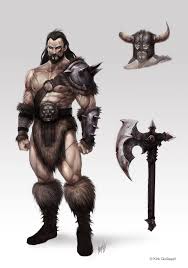
barbarian基本信息
读法:英 [bɑː"beərɪən] 美 [bɑr"bɛrɪən]
释义:
使用频率:★
星级词汇:★
英英释义
Noun:
"barbaric practices"
"a savage people"
"fighting is crude and uncivilized especially if the weapons are efficient"
"wild tribes"
中英词源
barbarian 野蛮人
barbar, 拟声词,模仿含混不清说话的声音,既指野蛮人,也指外国人。
- barbarian (adj.)
- mid-14c., from Medieval Latin barbarinus (source of Old French barbarin "Berber, pagan, Saracen, barbarian"), from Latin barbaria "foreign country," from Greek barbaros "foreign, strange, ignorant," from PIE root *barbar- echoic of unintelligible speech of foreigners (compare Sanskrit barbara- "stammering," also "non-Aryan," Latin balbus "stammering," Czech blblati "to stammer").
Greek barbaroi (n.) meant "all that are not Greek," but especially the Medes and Persians. Originally not entirely pejorative, its sense darkened after the Persian wars. The Romans (technically themselves barbaroi) took up the word and applied it to tribes or nations which had no Greek or Roman accomplishments. The noun is from late 14c., "person speaking a language different from one"s own," also (c. 1400) "native of the Barbary coast;" meaning "rude, wild person" is from 1610s.
词态变化
复数 barbarians;
权威造句
- 1. Our maths teacher was a bully and a complete barbarian.
- 我们的数学老师是个坏蛋,一个彻头彻尾的野蛮人。
来自柯林斯例句
- 2. We need to fight this barbarian attitude to science.
- 我们需要与这种对待科学的野蛮态度作斗争。
来自柯林斯例句
- 3. barbarian invasions of the fifth century
- 五世纪时野蛮人的入侵
来自《权威词典》
- 4. The walled city was attacked by barbarian hordes.
- 那座有城墙的城市遭到野蛮部落的袭击.
来自《简明英汉词典》
- 5. The rest of the clan thinks the uniform is only fit for a barbarian or a man of the lowest class.
- 家族里的其他人员认为,这样的制服只适合野蛮人或最低贱的人穿.
来自《简明英汉词典》
近反义词
相似短语
单词分析
暂无,等待补充.
记忆方法
1. 古希腊人很看不起外地人,说外地人讲话是 *barbar-,这是一个拟声词根,模拟小孩咿呀学语时口齿不清的声音、发音,由此表示“说话像孩子那样口齿不清”,现在演化为 barbarous "未开化的"、barbarian "野蛮人,就像咱们称呼未开化的外族人为:蛮人、夷人、胡人等"。汉语说“巴拉巴拉”时,也是一种拟声、也是一种贬义,这时英语用 blah-blah,这与汉语的拟声完全一样。
2. from PIE root *barbar- echoic of unintelligible speech of foreigners.
3. Originally not entirely pejorative, its sense darkened after the Persian wars. The Romans (technically themselves barbaroi) took up the word and applied it to tribes or nations which had no Greek or Roman accomplishments.
4. barbar- + -ian.
版权声明:问题易所有作品(图文、音视频)均来源网络,版权归原创作者所有,与本站立场无关,如不慎侵犯了你的权益,请联系我们告知,我们将做删除处理!