
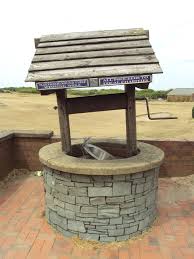
well基本信息
读法:英 [wel] 美 [wɛl]
释义:
使用频率:★
星级词汇:★★★★★
英英释义
Noun:
"the wound is nearly well"
"a well man"
"I think I"m well; at least I feel well"
"it is good that you stayed"
"it is well that no one saw you"
"all"s well that ends well"
"a task well done"
"the party went well"
"he slept well"
"a well-argued thesis"
"a well-seasoned dish"
"a well-planned party"
"the baby can walk pretty good"
"she was well informed"
"shake well before using"
"in order to avoid food poisoning be sure the meat is well cooked"
"well-done beef"
"well-satisfied customers"
"well-educated"
"a mistake that could easily have ended in disaster"
"you may well need your umbrella"
"he could equally well be trying to deceive us"
"was well aware of the difficulties ahead"
"suspected only too well what might be going on"
"the fetus has well developed organs"
"his father was well pleased with his grades"
"he thought well of the book"
"painting the room white made it seem considerably (or substantially) larger"
"the house has fallen considerably in value"
"the price went up substantially"
"could not well refuse"
"he writes well"
"The children were settled advantageously in Seattle"
"she has been able to live comfortably since her husband died"
"took the tragic news well"
"the currents well up"
中英词源
well 好的
来自PIE*wel,希望,希冀,词源同will。引申义好的。
well 源泉,水井,喷出
来自PIE*wel,弯,转,翻滚,词源同vault,wallow,voluble。引申词义水井,源泉。
- well
- well: English has two distinct words well, both of ancient ancestry. The adverb, ‘satisfactorily’ [OE], has relatives throughout the Germanic languages (German wohl, Dutch wel, Swedish väl, and Danish vel), and probably goes back ultimately to the Indo-European base *wel-, *wol-, which also gave English voluntary, wealth, and will.
It was not used as an adjective until the 13th century. Well ‘water-hole’ [OE] is descended from the Germanic base *wal-, *wel- ‘roll’ (source also of English wallet, wallow, waltz, welter, etc), and so etymologically denotes a place where water ‘bubbles’ up. This original notion of turbulent overflowing liquid is better preserved in the related verb well ‘gush’ [OE], which to begin with meant ‘boil’, and hence ‘melt metal’ (‘He made him drink welled lead’, Holy Rood 1300), and produced English weld.
=> voluntary, wealth, will; volume, wallow, waltz, weld, welter - well (adv.)
- "in a satisfactory manner," Old English wel "abundantly, very, very much; indeed, to be sure; with good reason; nearly, for the most part," from Proto-Germanic *welo- (cognates: Old Saxon wela, Old Norse vel, Old Frisian wel, Dutch wel, Old High German wela, German wohl, Gothic waila "well"), from PIE root *wel- (2) "to wish, will" (cognates: Sanskrit prati varam "at will," Old Church Slavonic vole "well," Welsh gwell "better," Latin velle "to wish, will," Old English willan "to wish;" see will (v.)).
Also used in Old English as an interjection and an expression of surprise. The adjective was in Old English in the sense "in good fortune, happy," from the adverb; sense of "satisfactory" is from late 14c.; "agreeable to wish or desire" is from mid-15c.; "in good health, not ailing" is from 1550s. Well-to-do "prosperous" is recorded from 1825. - well (v.)
- "to spring, rise, gush," Old English wiellan (Anglian wællan), causative of weallan "to boil, bubble up, rise (in reference to a river)" (class VII strong verb; past tense weoll, past participle weallen), from Proto-Germanic *wall- "roll" (cognates: Old Saxon wallan, Old Norse vella, Old Frisian walla, Old High German wallan, German wallen, Gothic wulan "to bubble, boil"), from PIE root *wel- (3) "to turn, roll" (see volvox), on notion of "roiling or bubbling water."
- well (n.)
- "hole dug for water, spring of water," Old English wielle (West Saxon), welle (Anglian) "spring of water, fountain," from wiellan (see well (v.)). "As soon as a spring begins to be utilized as a source of water-supply it is more or less thoroughly transformed into a well" [Century Dictionary]. Figurative sense of "source from which anything is drawn" was in Old English.
词态变化
复数 wells;
第三人称单数 wells;
过去式 welled;
现在分词 welling;
比较级 better;
最高级 best;
wwW.wenTIyI.com
权威造句
- 1. He was well acquainted with the literature of France, Germany and Holland.
- 他对于法国、德国和荷兰的文学了如指掌。
来自柯林斯例句
- 2. Well, at any rate, let me thank you for all you did.
- 好吧,不管怎样,还是要感谢你所做的一切。
来自柯林斯例句
- 3. His beautifully illustrated book well attested his love of the university.
- 他那本带有精美插图的书见证了他对大学的热爱。
来自柯林斯例句
- 4. His wife wasn"t feeling too well and she wanted to go home.
- 他的妻子感到有些不舒服,想要回家。
来自柯林斯例句
- 5. Well, so much for the producers. But what of the con-sumers?
- 好吧,关于生产商就讲这么多,那关于消费者呢?
来自柯林斯例句
近反义词
adv.
相似短语
单词分析
这些形容词均含“健康的,强健的”之意。healthy指身体无病,也可指身心健全、正常的。
sound侧重身体各部分或器官没有病,无任何缺陷,即健康。
robust强调身体强健。
well仅指没有疾病,但不一定很健康。
strong既指体格健壮,又指体力或精神上的力量。
vigorous指人强健有力,精力充沛。
sturdy侧重于结实的体格。
tough着重指人的体格健壮。
wholesome多指能给人留下身体健康、思想健全或品德良好等印象。
fit既可指健壮又可指健全无病。
记忆方法
暂无,等待补充.
版权声明:问题易所有作品(图文、音视频)均来源网络,版权归原创作者所有,与本站立场无关,如不慎侵犯了你的权益,请联系我们告知,我们将做删除处理!