
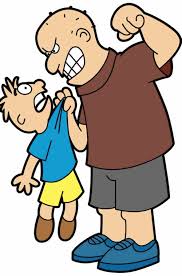
bully基本信息
读法:英 ["bʊlɪ] 美 ["bʊli]
释义:
使用频率:★★
星级词汇:★★★
英英释义
Noun:
"a neat sports car"
"had a great time at the party"
"you look simply smashing"
中英词源
bully 欺负
来自brother 昵称。原指老大哥,起保护作用,但也可随时以大欺小。
- bully
- bully: [16] Bullies have undergone a sad decline in status. In the 16th century the word meant ‘sweetheart’: ‘Though she be somewhat old, it is my own sweet bully’, John Bale, Three laws 1538. But gradually the rot set in, its meaning passing through ‘fine fellow’ to ‘blusterer’ to the present-day harasser of inferiors. In the 18th and 19th centuries it also meant ‘pimp’.
It is probably a modification of Dutch boele ‘lover’ which, as a term of endearment, may have originated as baby-talk. This bully has no connection with the bully of bully beef [18], which comes from French bouilli, the past participle of bouillir ‘boil’. The bully of bully off [19], a now discontinued way of starting play in hockey, appears to come from a term for ‘scrummage’ in Eton football, but whether that is related to the cruel bully is not clear. - bully (n.)
- 1530s, originally "sweetheart," applied to either sex, from Dutch boel "lover; brother," probably a diminutive of Middle Dutch broeder "brother" (compare Middle High German buole "brother," source of German Buhle "lover;" see brother (n.)).
Meaning deteriorated 17c. through "fine fellow" and "blusterer" to "harasser of the weak" (1680s, from bully-ruffian, 1650s). Perhaps this was by influence of bull (n.1), but a connecting sense between "lover" and "ruffian" may be in "protector of a prostitute," which was one sense of bully (though not specifically attested until 1706). The expression meaning "worthy, jolly, admirable" (especially in 1864 U.S. slang bully for you!) is first attested 1680s, and preserves an earlier, positive sense of the word. - bully (v.)
- 1710, from bully (n.). Related: Bullied; bullying.
词态变化
复数 bullies;
第三人称单数 bullies;
过去式 bullied;
过去分词 bullied;
现在分词 bullying;
权威造句
- 1. Some people accuse the tax inspectors of bully-boy tactics.
- 有些人指控税务稽查员使用了流氓手段。
来自柯林斯例句
- 2. Our maths teacher was a bully and a complete barbarian.
- 我们的数学老师是个坏蛋,一个彻头彻尾的野蛮人。
来自柯林斯例句
- 3. The aggression of a bully leaves people feeling hurt, angry and impotent.
- 暴徒的侵犯令人们感到痛心、愤怒却又无能为力。
来自柯林斯例句
- 4. He"s a coward and a bully who confuses physical strength with manhood.
- 他是一个懦夫,一个分不清蛮力和大丈夫气概的恃强凌弱者。
来自柯林斯例句
- 5. We think an attempt to bully them into submission would be counterproductive.
- 我们认为试图迫使他们屈服会适得其反。
来自柯林斯例句
近反义词
相似短语
单词分析
暂无,等待补充.
记忆方法
暂无,等待补充.
版权声明:问题易所有作品(图文、音视频)均来源网络,版权归原创作者所有,与本站立场无关,如不慎侵犯了你的权益,请联系我们告知,我们将做删除处理!