
can基本信息
读法:英 [kæn] 美 [kæn]
释义:
使用频率:★★
星级词汇:★★★★★
英英释义
Noun:
"are you going to sit on your fanny and do nothing?"
"The company terminated 25% of its workers"
中英词源
can 能
来自PIE *gno, 知道,词源同know.WwW.wENTiyi.coM
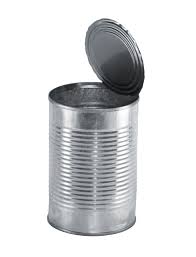
can 金属罐
词源同cane, 芦苇。引申义容器,罐子。
- can
- can: [OE] English has two distinct words can. The verb ‘be able to’ goes back via Old English cunnan and Germanic *kunnan to an Indo- European base *gn-, which also produced know. The underlying etymological meaning of can is thus ‘know’ or more specifically ‘come to know’, which survived in English until comparatively recently (in Ben Jonson’s The Magnetick Lady 1632, for example, we find ‘She could the Bible in the holy tongue’).
This developed into ‘know how to do something’, from which we get the current ‘be able to do something’. The past tense could comes ultimately from prehistoric Germanic *kuntha, via Old English cūthe (related to English uncouth) and late Middle English coude; the l is a 16th-century intrusion, based on the model of should and would. (Canny [16] is probably a derivative of the verb can, mirroring a much earlier but parallel formation cunning.) Can ‘container’ appears to come from a prehistoric Germanic *kannōn-.
=> canny, cunning, ken, know, uncouth - can (v.1)
- Old English 1st & 3rd person singular present indicative of cunnan "know, have power to, be able," (also "to have carnal knowledge"), from Proto-Germanic *kunnan "to be mentally able, to have learned" (cognates: Old Norse kenna "to know, make known," Old Frisian kanna "to recognize, admit," German kennen "to know," Gothic kannjan "to make known"), from PIE root *gno- (see know).
Absorbing the third sense of "to know," that of "to know how to do something" (in addition to "to know as a fact" and "to be acquainted with" something or someone). An Old English preterite-present verb, its original past participle, couth, survived only in its negation (see uncouth), but see also could. The present participle has spun off as cunning. - can (n.)
- Old English canne "a cup, container," from Proto-Germanic *kanna (cognates: Old Saxon, Old Norse, Swedish kanna, Middle Dutch kanne, Dutch kan, Old High German channa, German Kanne). Probably an early borrowing from Late Latin canna "container, vessel," from Latin canna "reed," also "reed pipe, small boat;" but the sense evolution is difficult.
Modern "air-tight vessel of tinned iron" is from 1867 (can-opener is from 1877). Slang meaning "toilet" is c. 1900, said to be a shortening of piss-can. Meaning "buttocks" is from c. 1910. - can (v.2)
- "to put up in cans," 1860, from can (n.1). Sense of "to fire an employee" is from 1905. Related: Canned; canning.
词态变化
过去式 could;
过去分词 could;
权威造句
- 1. If you invert " I can " , you have " can I ".
- 如果你把Ican两词前后颠倒一下,就成了 can I.
来自《简明英汉词典》
- 2. The happiest are not those who own all the best things, but those who can appreciate the beauty of life.
- 最幸福的人们并不一定什么都是最好,只是他们懂得欣赏生活的美好。
来自金山词霸 每日一句
- 3. You have to do everything you can. You have to work your hardest. And if you do, if you stay positive, then you have a shot at a silver lining.
- 你必须全力以赴,最大限度地去努力。如果你这么做,并且保持乐观,你就会看见乌云背后的幸福线。
来自电影《乌云背后的幸福线》
- 4. You can improve your chances of profit by sensible planning.
- 你可以通过合理计划来提高盈利的机会。
来自柯林斯例句
- 5. You can chat to other people who are online.
- 你可以和其他在线的人聊天。
来自柯林斯例句
近反义词
相似短语
单词分析
这两个名词均有“罐头”之意。can为美国英语,现在英国也用。
in为英国英语。
记忆方法
暂无,等待补充.
版权声明:问题易所有作品(图文、音视频)均来源网络,版权归原创作者所有,与本站立场无关,如不慎侵犯了你的权益,请联系我们告知,我们将做删除处理!