
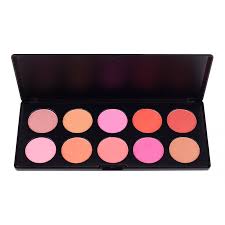
blush基本信息
读法:英 [blʌʃ] 美 [blʌʃ]
释义:
使用频率:★
星级词汇:★★★
英英释义
Noun:
中英词源
blush 脸红的
来自PIE *bhel, 发光,闪耀。指脸发红。词源同blaze, 明亮。
- blush
- blush: [OE] Modern English blush is a descendant of Old English blyscan ‘turn red, blush’, which was related to and perhaps derived from Old English blysa ‘firebrand, torch’. Similarities of form and meaning make it tempting to compare blaze, which meant ‘torch’ in Old English and came from a prehistoric Germanic *blasōn, but no connection has ever been established. Middle Dutch blosen ‘glow’ may be an intermediate form.
- blush (v.)
- mid-14c., bluschen, blischen, probably from Old English blyscan "blush, become red, glow" (glossing Latin rutilare), akin to blyse "torch," from Proto-Germanic *blisk- "to shine, burn," which also yielded words in Low German (Dutch blozen "to blush") and Scandinavian (Danish blusse "to blaze; to blush"); ultimately from PIE *bhel- (1) "to shine, flash, burn" (see bleach (v.)).
For vowel evolution, see bury. Earliest recorded senses were "to shine brightly; to look, stare." Sense of "turn red in the face" (with shame, modesty, etc.) is from c. 1400. Related: Blushed; blushing. - blush (n.)
- mid-14c., "a look, a glance" (sense preserved in at first blush), also "a gleam, a gleaming" (late 14c.), from blush (v.). As "a reddening of the face" from 1590s. Meaning "a rosy color" is 1590s.
词态变化
复数 blushes;
第三人称单数 blushes;
过去式 blushed;
过去分词 blushed;
现在分词 blushing;
WWw.weNtIYi.coM
权威造句
- 1. I felt myself blush. Then I sniffed back a tear.
- 我觉得自己的脸红了,接着我吸吸鼻子,不让眼泪掉下来。
来自柯林斯例句
- 2. I felt myself blush.
- 我不觉脸红了。
来自柯林斯例句
- 3. His remark brought a blush into the girl"s cheeks.
- 他的话使这姑娘两颊红晕.
来自《现代英汉综合大词典》
- 4. I have to blush to admit that thing.
- 我不得不羞愧地承认了那件事.
来自《简明英汉词典》
- 5. Her blush told of her embarrassment.
- 她脸红显露出她的困窘.
来自《简明英汉词典》
近反义词
相似短语
单词分析
这两个动词均含有“脸红”之意。blush侧重因羞愧或尴尬而突然脸红。
flush强调因愤怒、高兴、羞愧、发烧或酗酒等引起的脸红。
记忆方法
1. 不拉屎.
版权声明:问题易所有作品(图文、音视频)均来源网络,版权归原创作者所有,与本站立场无关,如不慎侵犯了你的权益,请联系我们告知,我们将做删除处理!