
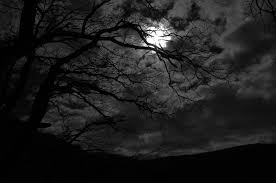
dark基本信息
读法:英 [dɑːk] 美 [dɑrk]
释义:
使用频率:★★★★
星级词汇:★★★★★
英英释义
Noun:
"his lectures dispelled the darkness"
"a dark day"
"dark shadows"
"dark as the inside of a black cat"
"dark glasses"
"dark colors like wine red or navy blue"
"a black lie"
"his black heart has concocted yet another black deed"
"Darth Vader of the dark side"
"a dark purpose"
"dark undercurrents of ethnic hostility"
"the scheme of some sinister intelligence bent on punishing him"
"the proverbially dour New England Puritan"
"a glum, hopeless shrug"
"he sat in moody silence"
"a morose and unsociable manner"
"a saturnine, almost misanthropic young genius"
"a sour temper"
"a sullen crowd"
"benighted ages of barbarism and superstition"
"the dark ages"
"a dark age in the history of education"
"those who do not appreciate Kafka"s work say his style is obscure"
"the dark days of the war"
"a week of rainy depressing weather"
"a disconsolate winter landscape"
"the first dismal dispiriting days of November"
"a dark gloomy day"
"grim rainy weather"
"dark-skinned peoples"
中英词源
dark 昏暗的,黑暗的
来自PIE*dher, 泥泞的,浑浊的,昏暗的,词源同dross. 词义由昏暗引申为黑暗的,黑色的。
- dark
- dark: [OE] Dark comes ultimately from a Germanic base *derk-, *dark-, which also produced Old High German tarchanjan ‘hide’ and Middle Low German dork ‘place where dirt collects’ (outside Germanic, Lithuanian dargus has been compared). In Old English the word usually denoted absence of light, particularly with reference to ‘night’; the application to colours did not develop until the 16th century.
- dark (adj.)
- Old English deorc "dark, obscure, gloomy; sad, cheerless; sinister, wicked," from Proto-Germanic *derkaz (cognates: Old High German tarchanjan "to hide, conceal"). "Absence of light" especially at night is the original meaning. Application to colors is 16c. Theater slang for "closed" is from 1916.
- dark (n.)
- early 13c., from dark (adj.). Figurative in the dark "ignorant" first recorded 1670s.
词态变化
比较级 darker;
最高级 darkest;
权威造句
- 1. In the dark my sense of hearing becomes so acute.
- 黑暗中我的听觉变得异常灵敏。
来自柯林斯例句WwW.wEntiYi.cOM
- 2. I managed to keep my parents in the dark about this.
- 我设法对父母瞒下了此事。
来自柯林斯例句
- 3. He stared into the dark void where the battle had been fought.
- 他凝望着那片漆黑的空旷之地,那次战役就是在这里进行的。
来自柯林斯例句
- 4. I"m scared of the dark. I"m a big chicken.
- 我怕黑,是个十足的胆小鬼。
来自柯林斯例句
- 5. Leo went on, his dark eyes wide with pity and concern.
- 利奥接着说下去,他的黑眼睛瞪得大大的,充满怜悯和关切。
来自柯林斯例句
近反义词
adj.
相似短语
单词分析
这些形容词都含有“完全地或不完全地缺少光亮”之意。dark最普通用词,指缺乏自然光线或人工照明,使某物漆黑无光或光线十分微弱。
dim指光线不足或视力较差,不能清晰地看见物体。
black侧重颜色是黑色的,有时也指无光的黑暗。
gloomy指光线不足或部分光线受阻而出现的阴暗。
obscure指因光线不充足而使物体灰暗不清,失去光泽或若隐若现。作借喻时指因复杂、深奥或含糊而难于理解。
vague通常作借喻用,形容抽象事物。
grey与dark意思相近,但侧重阴暗单调的意味。
记忆方法
暂无,等待补充.
版权声明:问题易所有作品(图文、音视频)均来源网络,版权归原创作者所有,与本站立场无关,如不慎侵犯了你的权益,请联系我们告知,我们将做删除处理!