
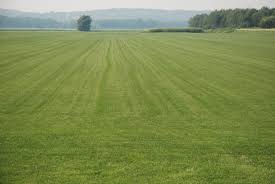
land基本信息
读法:英 [lænd] 美 [lænd]
释义:
使用频率:★★★★★
星级词汇:★★★★★
英英释义
Noun:
"good agricultural soil"
"he made it the law of the land"
"the earth shook for several minutes"
"he dropped the logs on the ground"
"he visited several European countries"
"a land of make-believe"
"the rise of the realm of cotton in the south"
"the news was announced to the nation"
"the whole country worshipped him"
"African nations"
"students who had come to the nation"s capitol"
"the country"s largest manufacturer"
"an industrialized land"
"there"s no work on the land any more"
"The plane landed in Istanbul"
中英词源
land 陆地,土地
来自PIE*landh,土地,荒野,词源同lawn.
- land
- land: [OE] Land goes back to a prehistoric Germanic *landam. This seems originally to have meant ‘particular (enclosed) area’ (ancestor of the modern sense ‘nation’), but in due course it branched out to ‘solid surface of the earth in general’. The term is now common to all the Germanic languages, and it has distant relatives in Welsh llan ‘enclosure, church’ and Breton lann ‘heath’ (source of French lande ‘heath, moor’, from which English gets lawn).
=> lawn - land (n.)
- Old English land, lond, "ground, soil," also "definite portion of the earth"s surface, home region of a person or a people, territory marked by political boundaries," from Proto-Germanic *landom (cognates: Old Norse, Old Frisian Dutch, Gothic land, German Land), from PIE *lendh- "land, heath" (cognates: Old Irish land, Middle Welsh llan "an open space," Welsh llan "enclosure, church," Breton lann "heath," source of French lande; Old Church Slavonic ledina "waste land, heath," Czech lada "fallow land").
Etymological evidence and Gothic use indicates the original sense was "a definite portion of the earth"s surface owned by an individual or home of a nation." Meaning early extended to "solid surface of the earth," which had been the sense of the root of Modern English earth. Original sense of land in English is now mostly found under country. To take the lay of the land is a nautical expression. In the American English exclamation land"s sakes (1846) land is a euphemism for Lord. - land (v.1)
- "to bring to land," early 13c., from land (n.). Originally of ships; of fish, in the angling sense, from 1610s; hence figurative sense of "to obtain" (a job, etc.), first recorded 1854. Of aircraft, attested from 1916. Related: Landed; landing.
- land (v.2)
- "to make contact, to hit home" (of a blow, etc.), by 1881, perhaps altered from lend in a playful sense, or else an extension of land (v.1).
词态变化
复数 lands;
第三人称单数 lands;
过去式 landed;
过去分词 landed;
现在分词 landing;
权威造句
- 1. The letter merely restated the law of the land.
- 这封信只不过重复了一下土地法。
来自柯林斯例句
- 2. Harry inherited the house and a sizeable chunk of land.
- 哈里继承了这座房子以及相当大的一片土地。
来自柯林斯例句
- 3. They used force to banish the natives from the more fertile land.
- 他们使用武力把土著居民驱逐出了比较肥沃的土地。
来自柯林斯例句Www.weNTIyi.cOm
- 4. The fires are likely to permanently deforest the land.
- 这些火灾很可能会彻底毁掉这片土地上的森林。
来自柯林斯例句
- 5. Their mission is simply to scout out places where helicopters can land.
- 他们的任务只是找到能够让直升机着陆的地方。
来自柯林斯例句
近反义词
n.
相似短语
单词分析
这些名词都有“土地,土,泥”之意。earth多指地表带有水分的泥土,较具体。
clay特指潮湿时发粘,而火烤后变坚硬的泥土。
dirt指地表的干松泥土。
land含义笼统。指与河流、海洋相对的陆地,也指可耕种的土地。
dust特指土壤干燥后,飞扬于空中的细微泥土。
soil特指适宜栽种农作物或生长各种植物的泥土。
mud指湿土,尤指雨后稀泥、污泥。
ground通常指大地的表面,也可指土壤、泥土或场地。
记忆方法
暂无,等待补充.
版权声明:问题易所有作品(图文、音视频)均来源网络,版权归原创作者所有,与本站立场无关,如不慎侵犯了你的权益,请联系我们告知,我们将做删除处理!