
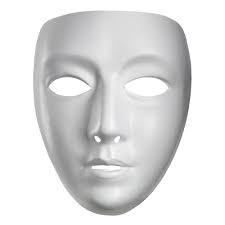
mask基本信息
读法:英 [mɑːsk] 美 [mæsk]
释义:
使用频率:★★★WWW.weNTIyI.CoM
星级词汇:★★★★
英英释义
Noun:
"they moved in under a mask of friendship"
"We disguised our faces before robbing the bank"
中英词源
mask 面具,面罩
来自中古法语masque,护脸,面罩,来自拉丁语masca,面具,鬼怪,幽灵。词源不确定,可能来自PIE*mask,黑色的,涂黑,并由该词引申词义巫师,术士等,见mascot.或来自mesh,网,网状物,并引申词义面纱,后来用于指面具,面罩。
- mask
- mask: [16] Mask may be of Arabic origin. The word maskharah ‘buffoon’ has been postulated as the source of Italian maschera, from which, via French masque, English got mask. In modern English, the word is largely restricted to ‘face covering’, but a range of other senses developed during the 16th and 17th centuries, including ‘masked ball’ and ‘allegorical dramatic entertainment’, which are now lumped together under the French spelling masque. The derivative masquerade [16] was borrowed from French mascarade, with the spelling of masque later grafted on to it.
=> masque, masquerade - mask (n.)
- 1530s, from Middle French masque "covering to hide or guard the face" (16c.), from Italian maschera, from Medieval Latin masca "mask, specter, nightmare," of uncertain origin, perhaps from Arabic maskharah "buffoon, mockery," from sakhira "be mocked, ridiculed." Or via Provençal mascarar, Catalan mascarar, Old French mascurer "to black (the face)," perhaps from a Germanic source akin to English mesh (q.v.). But compare Occitan mascara "to blacken, darken," derived from mask- "black," which is held to be from a pre-Indo-European language, and Old Occitan masco "witch," surviving in dialects; in Beziers it means "dark cloud before the rain comes." [See Walther von Wartburg, "Französisches Etymologisches Wörterbuch: Eine Darstellung galloromanischen sprachschatzes"]. Figurative use by 1570s.
- mask (v.)
- 1560s, "take part in a masquerade;" 1570s, "to disguise;" 1580s, "to wear a mask," from mask (n.). Figurative use by 1580s. Extended sense of "to disguise" is attested from 1847. Related: Masked; masking. Masking tape recorded from 1927; so called because it is used to block out certain surfaces before painting.
词态变化
复数 masks;
第三人称单数 masks;
过去式 masked;
过去分词 masked;
现在分词 masking;
权威造句
- 1. But as with other charitable bodies, these figures mask the true picture.
- 但和其他慈善机构一样,这些数字掩盖了实情。
来自柯林斯例句
- 2. This mask leaves your complexion feeling soft and supple.
- 这种面膜能使你的皮肤变得柔软细嫩。
来自柯林斯例句
- 3. Diane lit a cigarette, trying to mask her agitation.
- 黛安娜点燃一根香烟,试图掩饰她的焦躁不安。
来自柯林斯例句
- 4. The healthy trade figures mask a much gloomier picture.
- 繁荣的贸易数据背后掩盖着贸易极不景气的真相。
来自柯林斯例句
- 5. The gunman, whose mask had slipped, fled.
- 面罩掉落的持枪歹徒逃之夭夭了。
来自柯林斯例句
近反义词
n.
相似短语
单词分析
这些动词均表示“伪装”或“掩饰”之意。disguise指改变装束或外表以掩饰自己的真面目或冒充他人。有时仅指掩饰感情、动机或意图。
mask本义为“面罩”,引申“掩饰”解时,指掩饰某物的真实性质或存在的伪装。
cloak指采取伪装来掩盖或隐藏真实面目或本性或企图。
记忆方法
1. m + ask =》外面雾霾很大,妈妈教我带上面具、口罩。
2. mask 【联系Mosaic马赛克】 面具 => mask 谐音也很像“马赛克”。
版权声明:问题易所有作品(图文、音视频)均来源网络,版权归原创作者所有,与本站立场无关,如不慎侵犯了你的权益,请联系我们告知,我们将做删除处理!