
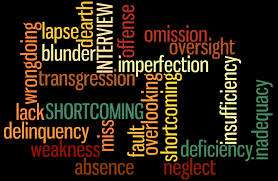
shortcoming基本信息
读法:英 ["ʃɔːtkʌmɪŋ] 美 ["ʃɔrtkʌmɪŋ]
释义:
使用频率:★
星级词汇:★★
英英释义
Noun:
中英词源
shortcoming 缺点,短处
来自短语 come short,不足的,不够的。引申名词词义缺点,短处。
- shortcoming (n.)
- 1670s, from the phrase to come short "be inadequate" (1570s); see short (adj.). Related: Shortcomings.
词态变化
复数 shortcomings;
权威造句
- 1. As soon as she realized she had a particular shortcoming, she resolutely overcame it.
- 她一发现自己的毛病, 就坚决改正.
来自《现代汉英综合大词典》
- 2. As we know prolixity is a big shortcoming to write articles.
- 众所周知,罗嗦是写文章的大忌。
来自辞典例句
- 3. Not being punctual is his greatest shortcoming.
- 不守时间是他的最大缺点.
来自辞典例句
- 4. Rudeness is his chief shortcoming.
- 粗鲁是他主要的缺点.
来自辞典例句wWw.WEnTiyi.COM
- 5. If it were not for this shortcoming, he is a fairly good teacher.
- 要不是有这一缺点, 他本是一个相当好的教师.
来自辞典例句
近反义词
相似短语
暂无,等待补充.
单词分析
这些名词均有“错误”或“缺点”之意。error指思想或行动背离正题轨道或没有得到正确指引而出现的偏差或错误。
fault一般指小并且可宽容的缺点、错误。
blunder通常指由于无知或情况不明造成判断或行动上的大错。
flaw指结构或组织上的缺点,如破裂之处。用作比喻意义时,指品格上的缺陷。
mistake最普通用词,泛指思想上、行为上或认识上的判断或理解方面的错误。
shortcoming指没有达到所要求的标准、没有充分发展或没尽到职责的不足、缺点或短处。多用复数形式。
defect普通用词。指表面上的缺陷,或指人或物本质上的缺点。
slip指因疏忽或无意而造成的差错。
记忆方法
暂无,等待补充.
版权声明:问题易所有作品(图文、音视频)均来源网络,版权归原创作者所有,与本站立场无关,如不慎侵犯了你的权益,请联系我们告知,我们将做删除处理!