
match基本信息
读法:英 [mætʃ] 美 [mætʃ]
释义:
使用频率:★★★★★
星级词汇:★★★★★
英英释义
Noun:
"as long you"ve a lucifer to light your fag"
"The handwriting checks with the signature on the check"
"The suspect"s fingerprints don"t match those on the gun"
"Matchmaker, can you match my daughter with a nice young man?"
"The student was paired with a partner for collaboration on the project"
"Your performance doesn"t even touch that of your colleagues"
"Her persistence and ambition only matches that of her parents"
"this job doesn"t match my dreams"
"pit a chess player against the Russian champion"
"He plays his two children off against each other"
"The company matched the discount policy of its competitors"
中英词源
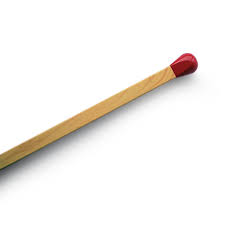
match 火柴
来自中古英语macche,灯芯或烛芯,来自希腊语myxa,鼻涕,灯芯,来自PIE*meug,黏的,滑的,词源同mucus,mucous.比喻用法,把悬荡的灯芯比喻成小孩的鼻涕。后引申词义用于点火的浸油小木条,最后指火柴。拼写比较bake,batch.
match 匹配,配对,比赛
来自古英语maecca,伴侣,妻子,丈夫,来自Proto-Germanic*makon,匹配,来自PIE*mag,揉,捏,词源同make,massage.后引申词义比赛,竞争等,即能匹敌的对手。
- match
- match: There are two unrelated words match in English, of which the older is ‘counterpart’ [OE]. This goes back to an Old English gemæcca ‘mate’, whose ancestry can be traced to a prehistoric *gamakjon, a word based on the collective prefix *ga- and *mak- ‘fit’ (source of English make). Its etymological meaning is thus ‘fitting well together’.
The use of the word as a verb emerged in the 14th century. Match ‘ignitable stick’ [14] originally meant ‘wick’. It comes via Old French meiche from Latin myxa ‘lamp nozzle’. The first record of its modern use for ‘ignitable stick’ comes from 1831 (the synonymous lucifer is exactly contemporary, but had virtually died out by the end of the 19th century).
=> make - match (n.1)
- "stick for striking fire," late 14c., macche, "wick of a candle or lamp," from Old French meiche "wick of a candle," from Vulgar Latin *micca/*miccia (source also of Catalan metxa, Spanish mecha, Italian miccia), probably ultimately from Latin myxa, from Greek myxa "lamp wick," originally "mucus," based on notion of wick dangling from the spout of a lamp like snot from a nostril, from PIE root *meug- "slimy, slippery" (see mucus). Modern spelling is from mid-15c. (English snot also had a secondary sense of "snuff of a candle, burnt part of a wick" from late 14c., surviving at least to late 19c. in northern dialects.)
Meaning "piece of cord or splinter of wood soaked in sulfur, used for lighting fires, lamps, candles, etc." is from 1530. First used 1831 for the modern type of wooden friction match, and competed with lucifer for much of 19c. as the name for this invention. - match (n.2)
- "one of a pair, an equal," Old English mæcca, "companion, mate, one of a pair, wife, husband, one suited to another, an equal," from gemæcca, from Proto-Germanic *gamakon "fitting well together" (cognates: Old Saxon gimaco "fellow, equal," Old High German gimah "comfort, ease," Middle High German gemach "comfortable, quiet," German gemach "easy, leisurely"), from PIE root *mak-/*mag- "to fit" (see make (v.)). Middle English sense of "matching adversary, person able to contend with another" (c. 1300) led to sporting meaning "contest," first attested 1540s.
- match (v.)
- "to join one to another" (originally especially in marriage), late 14c., from match (n.2). Meaning "to place (one) in conflict with (another)" is from c. 1400. That of "to pair with a view to fitness" is from 1520s; that of "to be equal to" is from 1590s. Related: Matched; matching.
词态变化
复数 matches;
第三人称单数 matches;
过去式 matched;
过去分词 matched;
现在分词 matching;
权威造句
- 1. He missed the catch and the match was lost.
- 他没有接住球,比赛输了。
来自柯林斯例句
- 2. Charlton are about to play an important away match.
- 查尔顿队即将在客场进行一场重要比赛。
来自柯林斯例句
- 3. Poland provide the opposition for the Scots" last warm-up match at home.
- 苏格兰队在国内最后一场热身赛的对手是波兰队。
来自柯林斯例句WwW.WeNTIYi.coM
- 4. This is something of a grudge match against a long-term enemy.
- 这可以说是一场与宿敌你死我活的比赛。
来自柯林斯例句
- 5. Jeremy wants some peace and quiet before his big match.
- 杰里米希望在大赛来临之前能享受到些许平静和安宁。
来自柯林斯例句
近反义词
n.
相似短语
单词分析
这些名词均有“比赛,竞争”之意。competition多指体育运动中的各项比赛、角逐,也指知识、技巧等方面的竞赛。
contest多指在音乐、书法、演讲等方面所进行的比赛或竞争。其结果,由评判委员会裁决。
match通常指体育运动项目的比赛,隐含势均力敌意味。 这些动词均含“相称,比得上,与……相比”之意。
match指对手之间力量、强度、性能或利益等的较量或竞争。
equal指在数量、价值或程度等方面已完全相等。
rival指某人或某物在和对手竞争中,在能力、质量等方面都能与之相匹敌,都能比得上。
记忆方法
暂无,等待补充.
版权声明:问题易所有作品(图文、音视频)均来源网络,版权归原创作者所有,与本站立场无关,如不慎侵犯了你的权益,请联系我们告知,我们将做删除处理!