
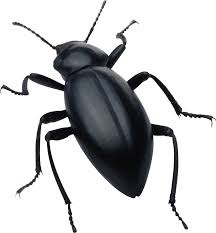
bug基本信息
读法:英 [bʌg] 美 [bʌɡ]
释义:
使用频率:★★
星级词汇:★★★★
英英释义
Noun:
"Is this hotel room bugged?"
中英词源
bug 小昆虫,故障
来自古英语词bugge, 妖怪,令人害怕之物。后指昆虫。故障义据说来自大发明家爱迪生,在检察某机器故障时发现是由于里面死了一个小虫。
- bug
- bug: [14] Originally, bug meant ‘something frightening’ – and in fact one of the earliest known uses of the word was for what we would now call a ‘scare-crow’. It is one of a set of words (others are bogle and perhaps bugaboo) for alarming or annoying phenomena, usually supernatural, whose interrelationship and ultimate source have never been adequately explained (see BOGEY). Bug ‘insect’ [16] is probably the same word, although it has also been connected with Old English budd ‘beetle’. The meanings ‘defect’ (from the 19th century) and ‘germ’ and ‘hidden microphone’ (both 20th-century) all developed from ‘insect’.
- bug (v.2)
- "to annoy, irritate," 1949, probably from bug (n.) and a reference to insect pests. Sense of "equip with a concealed microphone" is from 1919. Related: Bugged; bugging.
- bug (n.)
- "insect," 1620s (earliest reference is to bedbugs), of unknown origin, probably but not certainly from or influenced by Middle English bugge "something frightening, scarecrow" (late 14c.), a meaning obsolete since the "insect" sense arose except in bugbear (1570s) and bugaboo (q.v.).
Probably connected with Scottish bogill "goblin, bugbear," or obsolete Welsh bwg "ghost, goblin" (compare Welsh bwgwl "threat," earlier "fear," Middle Irish bocanách "supernatural being"). Some speculate that these words are from a root meaning "goat" (see buck (n.1)) and represent originally a goat-like spectre. Compare also bogey (n.1) and German bögge, böggel-mann "goblin." Perhaps influenced in meaning by Old English -budda used in compounds for "beetle" (compare Low German budde "louse, grub," Middle Low German buddech "thick, swollen").In the United States bug is not confined, as in England, to the domestic pest, but is applied to all insects of the Coleoptera order, which includes what in this country are generally called beetles. [Farmer & Henley, "Dictionary of Slang and Colloquial English," 1912 abridged edition]
Meaning "defect in a machine" (1889) may have been coined c. 1878 by Thomas Edison (perhaps with the notion of an insect getting into the works). Meaning "person obsessed by an idea" (such as firebug) is from 1841, perhaps from notion of persistence. Sense of "microbe, germ" is from 1919. Bugs "crazy" is from c. 1900. Bug juice as a slang name for drink is from 1869, originally "bad whiskey." The 1811 slang dictionary has bug-hunter "an upholsterer." Bug-word "word or words meant to irritate and vex" is from 1560s. - bug (v.1)
- "to bulge, protrude," 1872, originally of eyes, perhaps from a humorous or dialect mispronunciation of bulge (v.). Related: Bugged; bugging. As an adjective, bug-eyed recorded from 1872; so commonly used of space creatures in mid-20c. science fiction that the initialism (acronym) BEM for bug-eyed monster was current by 1953.
- bug (v.3)
- "to scram, skedaddle," 1953, of uncertain origin, perhaps related to bug (v.2), and compare bug off.
词态变化
复数 bugs;
第三人称单数 bugs;
过去式 bugged;
过去分词 bugged;
现在分词 bugging;
权威造句
- 1. He heard that they were planning to bug his office.
- 他得知他们打算在他办公室安装窃听器。
来自柯林斯例句
- 2. Don"t bug private conversations, and don"t buy papers that reprint them.
- 不要窃听私人谈话,不要购买重印这些谈话的报纸。
来自柯林斯例句
- 3. There was a bug going around at the club.
- 这个俱乐部流行着一种轻微的传染病。
来自柯林斯例句
- 4. We were bug-eyed in wonderment.
- 我们非常惊奇,眼珠都快瞪出来了。
来自柯林斯例句WWW.wentiyi.coM
- 5. There is a bug in the software.
- 软件有漏洞。
来自柯林斯例句
近反义词
v.
相似短语
单词分析
这些名词均含“虫,昆虫”之意。bug指小昆虫,尤指吸血的臭虫,也可指细菌。
insect含义广泛,多指蚂蚁、黄蜂、蝉等等。
pest指有害的昆虫或有害的小动物。
worm侧重指蚯蚓、蚕、毛虫等小而无骨的虫。
记忆方法
【八个】八个臭虫
版权声明:问题易所有作品(图文、音视频)均来源网络,版权归原创作者所有,与本站立场无关,如不慎侵犯了你的权益,请联系我们告知,我们将做删除处理!