
heave基本信息
读法:英 [hiːv] 美 [hiv]
释义:
使用频率:★
星级词汇:★★★
英英释义
Noun:
"fireman learn several different raises for getting ladders up"
"he was not good at heaving passes"
中英词源
heave 用力举起Www.WeNTiYi.COM
来自古英语hebban,举起,提起,词源同heavy.
- heave
- heave: [OE] Heave is part of a major family of English words that can trace their ancestry back to Indo-European *kap- ‘seize’. One of its Latin descendants was the verb capere ‘take’, which has given English capable, capacious, capstan, caption, captious, capture, case (for carrying things), cater, chase, prince, and many others.
To Germanic it gave *khabjan, from which come German heben ‘lift’ and English heave (which also originally meant ‘lift’; ‘throw’ and ‘haul’ are 16th-century developments). Haft [OE] (literally ‘something by which one seizes or holds on to something’) and heavy are derived from the same base as heave, and have may be related. Hefty [19] comes from heft ‘weight, heaviness’ [16], which was formed from heave on the analogy of such pairs as weave and weft.
=> capable, capacious, capstan, caption, captive, capture, case, cater, chase, haft, heavy, hefty, prince - heave (v.)
- Old English hebban "to lift, raise; lift up, exalt" (class VI strong verb; past tense hof, past participle hafen), from Proto-Germanic *hafjan (cognates: Old Norse hefja, Dutch heffen, German heben, Gothic hafjan "to lift, raise"), from PIE *kap-yo-, from root *kap- "to grasp" (see capable).
Related to have (Old English habban "to hold, possess"). Meaning "to throw" is from 1590s. Nautical meaning "haul or pull" in any direction is from 1620s. Intransitive use from early 14c. as "be raised or forced up;" 1610s as "rise and fall with alternate motion." Sense of "retch, make an effort to vomit" is first attested c. 1600. Related: Heaved; heaving. Nautical heave-ho was a chant in lifting (c. 1300, hevelow). - heave (n.)
- 1570s, from heave (v.). Meaning "a dismissal" is from 1944.
词态变化
权威造句
- 1. It took only one heave to hurl him into the river.
- 只一推,就把他推进了河里。
来自柯林斯例句
- 2. Captain Cornish repeated his order to heave to.
- 科尼什船长再次下达了停航的命令。
来自柯林斯例句
- 3. I managed to heave the trunk down the stairs.
- 我用力把箱子弄下楼梯。
来自《权威词典》
- 4. A performance like that makes me want to heave up.
- 那样的表演真叫我恶心.
来自《简明英汉词典》
- 5. We heave him onto the platform.
- 我们把他抬起送到站台上.
来自《简明英汉词典》
近反义词
相似短语
单词分析
这些动词均有“升起,举起”之意。lift指用人力或机械力把某物升到较高的位置。
hoist多指用绳索、滑轮等机械把重物升起。
raise较正式用词,常可与lift换用,但强调把某物举起或抬起到应有的高度。常用比喻。
elevate较正式用词,指位置、高度的升高,多作比喻用,指职位、品德等的提高。
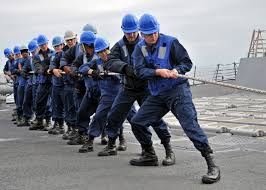
heave指需花大力气或借外力才能举起或抬起重物。
boost原义指从后面或下面推起或提高,现常用于指提高价格、振作精神等抽象概念。 这些动词均有“抛、投、掷”之意。
throw普通用词,使用广泛,仅指用力抛掷,不涉及动作方式或感情色彩。
cast常可与throw互换,指迅速扔出一个重量较轻的物体。
fling指用力投掷,或因感情激动而粗暴地或漫无目的地扔东西。
heave指把重物举起后扔出。
hurl通常指用力投掷,动作迅猛,所投掷的距离也较远。
pitch指随意地、轻轻地掷或扔,侧重方向性和有明确的目标。
toss指无什么目的地、轻轻地、随意地掷或扔,所扔掷的东西一般都比较轻。
记忆方法
1. heavy => heave => 举重。
版权声明:问题易所有作品(图文、音视频)均来源网络,版权归原创作者所有,与本站立场无关,如不慎侵犯了你的权益,请联系我们告知,我们将做删除处理!