
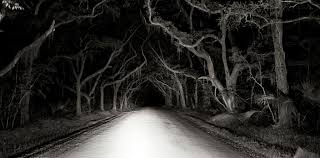
bleak基本信息
读法:英 [bliːk] 美 [blik]
释义:
使用频率:★★
星级词汇:★★★
英英释义
Adjective:
"prospects were bleak"
"Life in the Aran Islands has always been bleak and difficult"
"took a dim view of things"
"barren lands"
"the bleak treeless regions of the high Andes"
"the desolate surface of the moon"
"a stark landscape"
中英词源
bleak 暗淡的
词源同bleach, 漂白,指苍白的,暗淡的。
- bleak
- bleak: [16] Bleak originally meant ‘pale’, and comes ultimately from an Indo-European base *bhleg-, possible source of black and a variant of *phleg-, which produced Greek phlégein ‘burn’ and Latin flagrāre ‘burn’ (whence English conflagration and flagrant; flame, fulminate, and refulgent are also closely related).
From *bhlegcame the prehistoric Germanic adjective *blaikos ‘white’, from which Old English got blāc ‘pale’ (the sense relationship, as with the possibly related blaze, is between ‘burning’, ‘shining brightly’, ‘white’, and ‘pale’). This survived until the 15th century in southern English dialects as bloke, and until the 16th century in the North as blake.
Its disappearance was no doubt hastened by its resemblance to black, both formally and semantically, since both ‘pale’ and ‘dark’ carry implications of colourlessness. Blake did however persist in Northern dialects until modern times in the sense ‘yellow’. Meanwhile, around the middle of the 16th century bleak had begun to put in an appearance, borrowed from a close relative of bloke/blake, Old Norse bleikr ‘shining, white’.
The modern sense ‘bare’ is recorded from very early on. A derivative of the Germanic base *blaikwas the verb *blaikjōn, source of Old English blǣcan ‘whiten’, the ancestor of modern English bleach (which may be related to blight). And a nasalized version of the stem may have produced blink [14].
=> bleach, blight, blink, conflagration, flagrant, flame, fulminate - bleak (adj.)
- c. 1300, "pale," from Old Norse bleikr "pale, whitish, blond," from Proto-Germanic *blaika- "shining, white," from PIE root *bhel- (1) "to shine, flash, burn" (see bleach (v.)). Later "bare, windswept" (1530s). Sense of "cheerless" is c. 1719 figurative extension. The same Germanic root produced Old English blac "pale," but this died out, probably from confusion with blæc "black;" however bleak persisted, with a sense of "bare" as well as "pale."
词态变化
比较级 bleaker;
最高级 bleakest;
副词 bleakly;
名词 bleakness;
权威造句
- 1. Her book paints a bleak picture of the problems women now face.
- 她的书是女性当下所面临问题的凄凉写照。
来自柯林斯例句
- 2. Many predicted a bleak future.
- 很多人都预测前景暗淡。
来自柯林斯例句
- 3. Alberg gave him a bleak stare.
- 阿尔伯格沮丧地凝视着他。
来自柯林斯例句
- 4. His face was bleak.
- 他脸色阴郁。
来自柯林斯例句
- 5. a bleak and desolate landscape
- 一片荒凉的景色
来自《权威词典》
近反义词
相似短语
单词分析
暂无,等待补充.
记忆方法
1. 野外不露雨的亭子.
【记】音:壁 + leak 墙壁露风→寒冷;bleach 苍白的 冬天是苍白寒冷的
版权声明:问题易所有作品(图文、音视频)均来源网络,版权归原创作者所有,与本站立场无关,如不慎侵犯了你的权益,请联系我们告知,我们将做删除处理!