
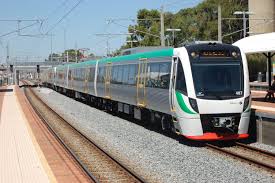
train基本信息
读法:英 [treɪn] 美 [tren]
释义:
使用频率:★★★★
星级词汇:★★★★★
英英释义
Noun:
"train of mourners"
"a train of thought"
"they joined the wagon train for safety"
"we develop the leaders for the future"
"He trained as a legal aid"
"Is this dog trained?"
"The prince was prepared to become King one day"
"They trained him to be a warrior"
"Train your tastebuds"
"She is well schooled in poetry"
"He trained his gun on the burglar"
"Don"t train your camera on the women"
"Take a swipe at one"s opponent"
"She is coaching the crew"
"She trained to Hamburg"
"She trained her long scarf behind her"
中英词源
train 火车,列车,行列,一系列,训练,受训
来自古法语 trainer,拖,拉,使移动,来自(缩写自)拉丁语 tractus,道路,路径,来自 trahere, 拖,拉,使移动,词源同 drag,tract.拼写比较 main,might.引申词义行列,队伍,一系列等, 后用于指火车,以及比喻词义训练,受训。拼写比较 strain,strict.
- train
- train: [14] A train is etymologically something that is ‘pulled’ along. The word was borrowed from Old French train, a derivative of the verb trahiner ‘drag’. And this in turn went back to Vulgar Latin *tragināre, a derivative of Latin *tragere, a variant of trahere ‘pull’. It was first used in English for ‘delay’, from the notion of being ‘pulled’ back, and ‘part of a garment that trails behind’ dates from the 15th century.
When steam locomotives pulling carriages were introduced in the 1820s, the combined vehicle was called a train of carriages; the simple term train is first recorded in 1835. The use of the verb train for ‘instruct, school’, which dates from the 16th century, evolved from an earlier ‘direct the course of growth of a plant’, which in turn went back to the original notion of ‘pulling’.
=> tractor - train (n.)
- early 14c., "a drawing out, delay;" late 14c., "trailing part of a skirt, gown, or cloak;" also "retinue, procession," from Old French train "tracks, path, trail (of a rome or gown); act of dragging," from trainer "to pull, drag, draw," from Vulgar Latin *traginare, extended from *tragere "to pull," back-formation from tractus, past participle of Latin trahere "to pull, draw" (see tract (n.1)).,
General sense of "series, progression, succession, continuous course" is from late 15c. Train of thought first attested 1650s. The railroad sense "locomotive and the cars coupled to it" is recorded from 1820 (publication year, dated 1816), from notion of a "train" of wagons or carriages pulled by a mechanical engine. - train (v.)
- "to discipline, teach, bring to a desired state by means of instruction," 1540s, probably from earlier sense of "draw out and manipulate in order to bring to a desired form" (late 14c.), specifically of the growth of branches, vines, etc. from mid-15c.; from train (n.). Sense of "point or aim" (a firearm, etc.) is from 1841. Sense of "fit oneself for a performance by a regimen or exercise" is from 1832. The meaning "to travel by railway" is recorded from 1856. Related: Trained; training.
词态变化
复数 trains;
第三人称单数 trains;
过去式 trained;
过去分词 trained;
现在分词 training;
权威造句
- 1. In 1941, the train would have been pulled by a steam engine.
- 1941年,火车本可以由蒸汽机车拉动。
来自柯林斯例句
- 2. He lost a foot when he was struck by a train.
- 他给火车撞伤,失去了一只脚。
来自柯林斯例句
- 3. Businesses need to train their workers better, and spend more on R&D.
- 各企业需要更好地培训工人,并且在研发方面加大投入。
来自柯林斯例句
- 4. The train backed out of Adelaide Yard on to the Dublin-Belfast line.
- 火车倒出了阿德莱德调车场,开上了都柏林-贝尔法斯特线。
来自柯林斯例句
- 5. He rode on the president"s luxury train through his own state.
- 他乘坐总统的豪华列车经过自己所在的州。
来自柯林斯例句
近反义词
v.
相似短语
单词分析
这些动词均含“教,教育,培养”之意。teach最普通用词,含义广泛。指直接教某人知识或技能等,侧重传播知识和帮助应用知识。
instruct与teach含义很接近,但语体较正式。指系统、详细、精心地传播知识,侧重教授与指示。
educate较正式用词,指教育,内容比teach广泛,侧重动机或结果,或对潜在能力的开发。
coach指对个人或小组等进行辅导、训练或补课。
train指训练与培养。
tutor指进行个别教学或课外辅导。
记忆方法
1. trah-(tract-) => train.
版权声明:问题易所有作品(图文、音视频)均来源网络,版权归原创作者所有,与本站立场无关,如不慎侵犯了你的权益,请联系我们告知,我们将做删除处理!