
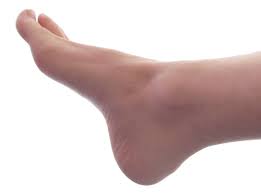
foot基本信息
读法:英 [fʊt] 美 [fʊt]
释义:
使用频率:★★★★★
星级词汇:★★★★★
英英释义
Noun:
"armored from head to foot"
"the foot of the page"
"the foot of the list"
"the foot of the mountain"
"he stood at the foot of the tower"
"the swiftest of foot"
"pick up the burden of high-interest mortgages"
"foot the bill"
中英词源
foot 脚wWw.WeNTIYi.cOm
来自PIE*ped, 脚,词源同biped, pedestal.用做测量单位英尺,因约略等于成人脚长而得名。
- foot
- foot: [OE] Foot traces its ancestry back to Indo- European *pōd-, *ped-, which provided the word for ‘foot’ in most modern Indo-European languages (the exceptions are the Slavic languages, whose ‘foot’ – words, such as Russian noga and Czech noha, come from a source that meant ‘claw’, and the Celtic languages – such as Welsh troed and Irish troigh).
Descendants include Greek poús ‘foot’ (whence English antipodes, pew, podium [18], and tripod, literally ‘three-footed’, a formation mirrored exactly by Latin trivet [15] and Hindi teapoy [19]), Persian pāē or pay (whence English pyjama), Sanskrit pádas ‘foot’ (source of pie ‘unit of Indian currency’), and Lithuanian pedà ‘footstep’, but the most fruitful of all from the point of view of the English lexicon has been Latin pēs, source of impede, pawn ‘chess piece’, pedal, pedestal, pedestrian, pedicure, pedigree, pedometer, peon, pioneer, quadruped, vamp, and velocipede (it also, of course, gave French pied, Italian piede, and Spanish pie).
Its Germanic descendant was *fōr-, which produced German fuss, Dutch voet, Swedish fot, Danish fod, and English foot. Other related forms in English include pilot and trapeze.
=> antipodes, impede, pawn, pedal, pedestal, pedestrian, pedigree, pilot, pioneer, podium, pyjamas, quadruped, trapeze, tripod, vamp - foot (n.)
- "terminal part of the leg of a vertebrate animal," Old English fot "foot," from Proto-Germanic *fot (cognates: Old Frisian fot, Old Saxon fot, Old Norse fotr, Danish fod, Swedish fot, Dutch voet, Old High German fuoz, German Fuß, Gothic fotus "foot"), from PIE root *ped- (1) "a foot" (cognates: Avestan pad-; Sanskrit pad-, accusative padam "foot;" Greek pos, Attic pous, genitive podos; Latin pes, genitive pedis "foot;" Lithuanian padas "sole," peda "footstep"). Plural form feet is an instance of i-mutation.
The linear measure was in Old English (the exact length has varied over time), this being considered the length of a man"s foot; a unit of measure used widely and anciently. In this sense the plural is often foot. The current inch and foot are implied from measurements in 12c. English churches (Flinders Petrie, "Inductive Metrology"), but the most usual length of a "foot" in medieval England was the foot of 13.2 inches common throughout the ancient Mediterranean. The Anglo-Saxon foot apparently was between the two. All three correspond to units used by the Romans, and possibly all three lengths were picked up by the Anglo-Saxons from the Romano-Britons. "That the Saxon units should descend to mediæval times is most probable, as the Normans were a ruling, and not a working, class." [Flinders Petrie, 1877]. The medieval Paul"s Foot (late 14c.) was a measuring standard cut into the base of a column at the old St. Paul"s cathedral in London. The metrical foot (late Old English, translating Latin pes, Greek pous in the same sense) is commonly taken to represent one rise and one fall of a foot: keeping time according to some, dancing according to others.
In Middle English also "a person" (c. 1200), hence non-foot "nobody." Meaning "bottom or lowest part of anything eminent or upright" is from c. 1200. Of a bed, grave, etc., from c. 1300. On foot "by walking" is from c. 1300. To get off on the wrong foot is from 1905 (the right foot is by 1907); to put one"s best foot foremost first recorded 1849 (Shakespeare has the better foot before, 1596); Middle English had evil-foot (adv.) "through mischance, unluckily." To put one"s foot in (one"s) mouth "say something stupid" is attested by 1942; the expression put (one"s) foot in something "make a mess of it" is from 1823. To have one foot in the grave "be near death" is from 1844. Colloquial exclamation my foot! expressing "contemptuous contradiction" [OED] is attested by 1923, probably euphemistic for my ass in the same sense, which dates to 1796 (also see eyewash). - foot (v.)
- c. 1400, "to dance," also "to move or travel on foot," from foot (n.). From mid-15c. as "make a footing or foundation." To foot a bill "pay the entirety of" is attested from 1848, from the process of tallying the expenses and writing the figure at the bottom ("foot") of the sheet; foot (v.) as "add up and set the sum at the foot of" is from late 15c. (compare footnote (n.)). The Old English verb gefotian meant "to hasten up." Related: Footed; footing.
词态变化
复数 feet;
权威造句
- 1. I tried to reach the foot brakes but I couldn"t.
- 我试图去够脚刹,但是没能踩到。
来自柯林斯例句
- 2. He lost a foot when he was struck by a train.
- 他给火车撞伤,失去了一只脚。
来自柯林斯例句
- 3. My hobbies are letter writing, foot-ball, music, photography, and tennis.
- 我的业余爱好是写信、踢足球、听音乐、玩摄影和打网球。
来自柯林斯例句
- 4. Stand straight and stretch the left hand to the right foot.
- 站直身体,伸左手够右脚.
来自柯林斯例句
- 5. She had decked him out from head to foot in expensive clothes.
- 她用昂贵的服装把他从头到脚打扮一新。
来自柯林斯例句
近反义词
相似短语
单词分析
暂无,等待补充.
记忆方法
暂无,等待补充.
版权声明:问题易所有作品(图文、音视频)均来源网络,版权归原创作者所有,与本站立场无关,如不慎侵犯了你的权益,请联系我们告知,我们将做删除处理!