
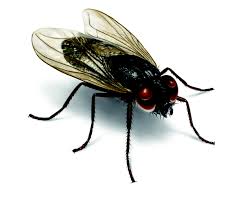
fly基本信息
读法:英 [flaɪ] 美 [flaɪ]
释义:
使用频率:★★★★★
星级词汇:★★★★★
英英释义
Noun:
"Time fleeing beneath him"
"Are we driving or flying?"
"All nations fly their flags in front of the U.N."
"all my stock assets have vaporized"
中英词源
fly 飞行,昆虫
来自PIE*pleu, 流动,漂浮,词源同float, fleet. 由飘动引申词义在空中浮动,飞翔,飞行等。同时,用来指小昆虫等。
- fly
- fly: [OE] Historically, ‘move through the air’ is something of a secondary semantic development for fly. Its distant Indo-European ancestor, *pleu-, denoted rapid motion in general, and in particular ‘flowing’ or ‘floating’, and it produced such offspring as Greek pléo ‘sail, float’ and Sanskrit plu- ‘sail, swim’, as well as English fleet, flood, flow, fowl, plover, and pluvial.
An extension to that base, *pleuk-, gave rise to Lithuanian plaukti ‘float, sail, swim’, and to prehistoric West and North Germanic *fleugan, source of German fliegen, Dutch vliegen, Swedish flyga, and English fly, all meaning ‘move with wings’. The insect-name fly is also of considerable antiquity, going back to a prehistoric Germanic derivative *fleugōn or *fleugjōn, but the origins of the adjective fly ‘crafty, sharp’ [19] are not known.
=> fleet, flood, flow, fowl, plover, pluvial - fly (n.)
- Old English fleoge "a fly, winged insect," from Proto-Germanic *fleugon "flying insect" (cognates: Old Saxon fleiga, Old Norse fluga, Middle Dutch vlieghe, Dutch vlieg, Old High German flioga, German Fliege "fly"); literally "the flying (insect)" (compare Old English fleogende "flying"), from same source as fly (v.1).
Originally any winged insect (moths, gnats, beetles, locusts, hence butterfly, etc.) and long used by farmers and gardeners for any insect parasite. Flies figuratively for "large numbers" of anything is from 1590s. Plural flien (as in oxen, etc.) gradually normalized 13c.-15c. to -s. Fly in the ointment is from Eccles. x:1. Fly on the wall "unseen observer" first recorded 1881. No flies on _____ "no lack of activity or alertness on the part of," is attested by 1866. Meaning "fish-hook dressed to resemble an insect" is from 1580s; Fly-fishing is from 1650s. Fly-catcher "bird which eats insects on the wing" is from 1670s. The fly agaric mushroom (1788) so called because it was used as a poison for flies.
The sense of "a flight, flying" is from mid-15c. From the verb and the notion of "flapping as a wing does" comes the noun sense of "tent flap" (1810), which was extended to "strip of material sewn into a garment as a covering for buttons" or some other purpose (1844). Baseball fly ball attested by 1866. To do something on the fly is 1856, apparently from baseball.When the catcher sees several fielders running to catch a ball, he should name the one he thinks surest to take it, when the others should not strive to catch the ball on the fly, but only, in case of its being missed, take it on the bound. ["The American Boys Book of Sports and Games," New York, 1864]
- fly (v.1)
- "to soar through air; move through the air with wings," Old English fleogan "to fly, take flight, rise into the air" (class II strong verb; past tense fleag, past participle flogen), from Proto-Germanic *fleugan "to fly" (cognates: Old Saxon fliogan, Old Frisian fliaga, Middle Dutch vlieghen, Dutch vliegen, Old High German fliogan, German fliegen, Old Norse flügja), from PIE *pleuk-, extended form of *pleu- "to flow, float" (see pluvial).
Meaning "go at full speed" is from c. 1300. In reference to flags, 1650s. Transitive sense "cause to move or float in air" (as a flag, kite, etc.) is from 1739; sense of "convey through the air" ("Fly Me to the Moon") is from 1864. Related: Flew; flied (baseball); flown; flying. Slang phrase fly off the handle "lose one"s cool" dates from 1825. - fly (v.2)
- "run away," Old English fleon, flion "fly from, avoid, escape;" essentially a variant spelling of flee (q.v.). In Old English, this verb and fleogan "soar through the air with wings" (modern fly (v.1)) differed only in their present tense forms and often were confused, then as now. In some Middle English dialects they seem to have merged completely. Distinguished from one another since 14c. in the past tense: flew for fly (v.1), fled for fly (v.2).
- fly (adj.)
- slang, "clever, alert, wide awake," by 1811, perhaps from fly (n.) on the notion of the insect being hard to catch. Other theories, however, trace it to fledge or flash. Slang use in 1990s might be a revival or a reinvention.
词态变化
复数 flies;
第三人称单数 flies;
过去式 flew;
过去分词 flown;
现在分词 flying;
权威造句
- 1. His inspiration to fly came even before he joined the Army.
- 他想开飞机的念头在参军之前就有了。
来自柯林斯例句
- 2. Then the woodcutter let his axe fly— Thwack! Everyone heard it.
- 然后那个伐木工脱手甩出了斧头。哐!每个人都听见了。
来自柯林斯例句
- 3. It was all pretty much done on the fly.
- 那几乎都是匆忙之中完成的。
来自柯林斯例句
- 4. Steve Crabb can fly the flag with distinction for Britain in Barcelona.
- 史蒂夫·克拉布在巴塞罗那可以旗帜鲜明地支持英国。
来自柯林斯例句WwW.wenTiYI.coM
- 5. You can fly direct to Amsterdam from most British airports.
- 从英国的大多数机场都可以直飞阿姆斯特丹。
来自柯林斯例句
近反义词
v.
相似短语
单词分析
这些动物或短语动词都有“逃跑、逃脱”之意。escape侧重逃跑的结果,不强调逃跑时的匆忙或危险情况。
flee书面用词,侧重指逃跑时动作匆忙,多含惧怕之意。
fly含义与flee相同,但系非正式用词。
get away口语用语。侧重指犯罪分子从现场逃跑或被捕时逃走。
run away口语用语,强调动作迅速。
记忆方法
1. fly <== 古英语:*fleo- <== 原始日耳曼语或原始印欧语:*fleu- / *pleu- => flew (音变:y -> v -> u -> w) => *flewen => flown.
版权声明:问题易所有作品(图文、音视频)均来源网络,版权归原创作者所有,与本站立场无关,如不慎侵犯了你的权益,请联系我们告知,我们将做删除处理!