
set基本信息
读法:英 [set] 美 [sɛt]
释义:
使用频率:★★★★★
星级词汇:★★★★★
英英释义
Noun:
"a set of golf clubs"
"a set of teeth"
"they were an angry lot"
"he tested the set of the glue"
"his instructions deliberately gave them the wrong set"
"fit to drop"
"laughing fit to burst"
"she was fit to scream"
"primed for a fight"
"we are set to go at any time"
"his bearded face already has a set hollow look"
"a face rigid with pain"
"strategically placed artillery"
"a house set on a hilltop"
"nicely situated on a quiet riverbank"
"stones laid in a pattern"
"the dictated terms of surrender"
"the time set for the launching"
"Set the tray down"
"Set the dogs on the scent of the missing children"
"Place emphasis on a certain point"
"specify the parameters"
"prepare for war"
"I was fixing to leave town after I paid the hotel bill"
"set these words in italics"
"the shaman sics sorcerers on the evil spirits"
"set the table"
"lay out the tools for the surgery"
"correct the alignment of the front wheels"
中英词源
set 放置,设置,布置,安排
来自古英语 settan,使坐下,放置,建造,来自 Proto-Germanic*satjan,使坐下,来自 PIE*sed, 坐下,词源同 sit,session.引申诸相关词义。
set 一套,一副,一组
来自古法语 sette,顺序,次序,来自拉丁语 secta,追随,组织,过去分词格于 sequi,跟随,追 随,词源同 sect,sequence. 字母 c 脱落,比较 saint,sanctify.引申词义集中的东西,一套,一
- set
- set: English has two words set. The verb [OE] is simply the causative version of sit. That is to say, etymologically it means ‘cause to sit’. It comes from a prehistoric Germanic *satjan (source also of German setzen, Dutch zetten, Swedish sätta, and Danish sætte), which was a causative variant of *setjan, ancestor of English sit. Set ‘group’ [14] is essentially the same word as sect.
It comes via Old French sette from Latin secta, source of English sect. It originally meant strictly a ‘group of people’, and its far broader modern application, which emerged in the 16th century, is no doubt due to association with the verb set and the notion of ‘setting’ things together.
=> sit; sect - set (v.)
- Old English settan (transitive) "cause to sit, put in some place, fix firmly; build, found; appoint, assign," from Proto-Germanic *(bi)satjan "to cause to sit, set" (cognates: Old Norse setja, Swedish sätta, Old Saxon settian, Old Frisian setta, Dutch zetten, German setzen, Gothic satjan), causative form of PIE *sod-, variant of *sed- (1) "to sit" (see sit (v.)). Also see set (n.2).
Intransitive sense from c. 1200, "be seated." Used in many disparate senses by Middle English; sense of "make or cause to do, act, or be; start" and that of "mount a gemstone" attested by mid-13c. Confused with sit since early 14c. Of the sun, moon, etc., "to go down," recorded from c. 1300, perhaps from similar use of the cognates in Scandinavian languages. To set (something) on "incite to attack" (c. 1300) originally was in reference to hounds and game. - set (adj.)
- "fixed," c. 1200, sett, past participle of setten "to set" (see set (v.)). Meaning "ready, prepared" first recorded 1844.
- set (n.1)
- "collection of things," mid-15c., from Old French sette "sequence," variant of secte "religious community," from Medieval Latin secta "retinue," from Latin secta "a following" (see sect). "[I]n subsequent developments of meaning influenced by SET v.1 and apprehended as equivalent to "number set together"" [OED]. The noun set was in Middle English, but only in the sense of "religious sect" (late 14c.), which likely is the direct source of some modern meanings, such as "group of persons with shared status, habits, etc." (1680s).
Meaning "complete collection of pieces" is from 1680s. Meaning "group of pieces musicians perform at a club during 45 minutes" (more or less) is from c. 1925, though it is found in a similar sense in 1580s. Set piece is from 1846 as "grouping of people in a work of visual art;" from 1932 in reference to literary works. - set (n.2)
- "act of setting; condition of being set" (of a heavenly body), mid-14c., from set (v.) or its identical past participle. Many disparate senses collect under this word because of the far-flung meanings assigned to the verb:
"Action of hardening," 1837; also "manner or position in which something is set" (1530s), hence "general movement, direction, tendency" (1560s); "build, form" (1610s), hence "bearing, carriage" (1855); "action of fixing the hair in a particular style" (1933).
"Something that has been set" (1510s), hence the use in tennis (1570s) and the theatrical meaning "scenery for an individual scene in a play, etc.," recorded from 1859. Other meanings OED groups under "miscellaneous technical senses" include "piece of electrical apparatus" (1891, first in telegraphy); "burrow of a badger" (1898). Old English had set "seat," in plural "camp; stable," but OED finds it "doubtful whether this survived beyond OE." Compare set (n.1).
Set (n.1) and set (n.2) are not always distinguished in dictionaries; OED has them as two entries, Century Dictionary as one. The difference of opinion seems to be whether the set meaning "group, grouping" (here (n.2)) is a borrowing of the unrelated French word that sounds like the native English one, or a borrowing of the sense only, which was absorbed into the English word. - Set
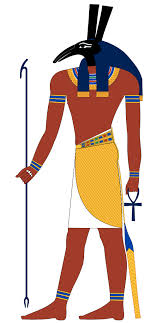
- Egyptian god, from Greek Seth, from Egyptian Setesh.
词态变化
复数 sets;
第三人称单数 sets;
过去式 set;
过去分词 set;
现在分词 setting;
权威造句
- 1. We post up a set of rules for the house.
- 我们张贴了一份房屋生活守则。
来自柯林斯例句
- 2. Place the omelette under a gentle grill until the top is set.
- 将煎蛋饼放在烤架下用文火烘烤,直到表面凝固。
来自柯林斯例句
- 3. She conceded just three points on her service during the first set.
- 她在第一盘自己的发球局仅失了3分。
来自柯林斯例句
- 4. Fire may have breached the cargo tanks and set the oil ablaze.
- 大火当时有可能把货船上的油罐烧漏了,从而引燃原油。
来自柯林斯例句Www.WeNTiyI.coM
- 5. The security zone was set up to prevent guerrilla infiltrations.
- 设立了安全区以防止游击队员的渗入。
来自柯林斯例句
近反义词
v.
相似短语
单词分析
这些动词均有“放”之意。lay指小心地把人或物平放或横放,侧重动作安稳。
place较正式用词,指把某物放在一个正确的位置上,侧重动作的正确。
put普通用词,含义较广泛。指把人或物置于某处,并将其留在该处。
set普通用词,指为了某种目的而将人或物放在一定位置上。指物是多指立着放。
记忆方法
暂无,等待补充.
版权声明:问题易所有作品(图文、音视频)均来源网络,版权归原创作者所有,与本站立场无关,如不慎侵犯了你的权益,请联系我们告知,我们将做删除处理!