
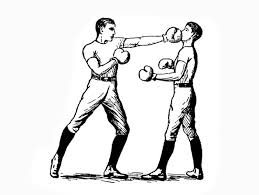
hit基本信息
读法:英 [hɪt] 美 [hɪt]
释义:
使用频率:★★★★★
星级词汇:★★★★★
英英释义
Noun:
"after three misses she finally got a hit"
"that new Broadway show is a real smasher"
"the party went with a bang"
"He struck the table with his elbow"
"The water reached the doorstep"
"We barely made it to the finish line"
"I have to hit the MAC machine before the weekend starts"
"He was stricken with cancer when he was still a teenager"
"The earthquake struck at midnight"
"He hit a home run"
"He hit .300 in the past season"
"An interesting idea hit her"
"A thought came to me"
"The thought struck terror in our minds"
"They were struck with fear"
"We must strike the enemy"s oil fields"
"in the fifth inning, the Giants struck, sending three runners home to win the game 5 to 2"
"she struck her head on the low ceiling"
"This car can reach a speed of 140 miles per hour"
"strike `z" on the keyboard"
"her comments struck a sour note"
中英词源
hit 击,打
来自古英语hittan,接触,掉落,来自PIE*keid,掉落,掉下,词源同accident,deciduous.引申词义击,打。
- hit
- hit: [11] Hit is one of those words, now so common that we assume it has always been around, that is in fact a comparative latecomer to the English language, and one, what is more, whose ancestry is not at all clear. The standard Old English verb for ‘strike’ was slēan (modern English slay), but at the end of the Old English period hit suddenly appeared. It was borrowed from Old Norse hitta, a verb of unknown origin which meant not ‘strike’ but ‘come upon, find’ (as Swedish hitta still does). This sense was carried over into English (and still survives in hit upon), and it was not until the 13th century that the meaning ‘strike’ began to appear.
- hit (v.)
- late Old English hyttan, hittan "come upon, meet with, fall in with, "hit" upon," from a Scandinavian source such as Old Norse hitta "to light upon, meet with," also "to hit, strike;" Swedish hitta "to find," Danish and Norwegian hitte "to hit, find," from Proto-Germanic *hitjan, of uncertain origin. Related: Hitting. Meaning shifted in late Old English period to "strike," via "to reach with a blow or missile," and replaced Old English slean in this sense. Original sense survives in phrases such as hit it off (1780, earlier in same sense hit it, 1630s) and is revived in hit on (1970s).
Underworld slang meaning "to kill by plan" is 1955 (as a noun in this sense from 1970). To hit the bottle "drink alcohol" is from 1889. To hit the nail on the head (1570s) is from archery. Hit the road "leave" is from 1873; to hit (someone) up "request something" is from 1917. Hit and run is 1899 as a baseball play, 1924 as a driver failing to stop at a crash he caused. To not know what hit (one) is from 1923. - hit (n.)
- late 15c., "a rebuke;" 1590s as "a blow," from hit (v.). Meaning "successful play, song, person," etc., 1811, is from the verbal sense of "to hit the mark, succeed" (c. 1400). Underworld slang meaning "a killing" is from 1970. Meaning "dose of narcotic" is 1951, from phrases such as hit the bottle.
词态变化
复数 hits;
第三人称单数 hits;
过去式 hit;
过去分词 hit;
现在分词 hitting;
权威造句
- 1. As I sidestepped, the bottle hit me on the left hip.
- 我侧一步要躲闪的时候,瓶子打中了我的左髋部。
来自柯林斯例句
- 2. If something"s a sure-fire hit then Radio One will play it.
- 如果哪首歌一定会火,那么第一频道肯定会播出。
来自柯林斯例句
- 3. He pushed everyone full speed ahead until production hit a bottleneck.
- 他催促所有人拼命干活,直到生产遭遇瓶颈。
来自柯林斯例句
- 4. He hit back angrily, saying such remarks were childishly simplistic.
- 他愤怒地反击,说这些话太过幼稚。
来自柯林斯例句
- 5. New $750,000 infomercials, featuring artists like Cher, have recently hit the screens.
- 耗资75万美元、有雪儿等艺人出镜的新的名人电视促销节目近来播出了。
来自柯林斯例句
近反义词
v.
相似短语
单词分析
这些动词均含有“打”之意。beat普通用词,含义广泛,指连续打击。游戏、竞赛或战争中作打败解。
strike普通用词,多指急速或突然一次猛击。
hit普通用词,常与strike换用,侧重有目标的猛击,强调用力击中。
thrash侧重指用棍子或鞭子等痛打。
whip多指用鞭子抽打。
记忆方法
暂无,等待补充.
版权声明:问题易所有作品(图文、音视频)均来源网络,版权归原创作者所有,与本站立场无关,如不慎侵犯了你的权益,请联系我们告知,我们将做删除处理!