
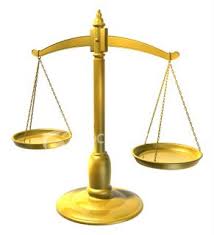
weigh基本信息
读法:英 [weɪ] 美 [we]
释义:
使用频率:★★★
星级词汇:★★★★
英英释义
Verb:
"The judge considered the offender"s youth and was lenient"
"Something pressed on his mind"
中英词源
weigh 称重
来自PIE*wegh,承载,运输,词源同way,vehicle,wagon.引申义承载,重量。
- weigh
- weigh: [OE] The etymological notion underlying weigh is ‘carrying’: for it comes ultimately from the Indo-European base *wegh-, which also produced Latin vehere ‘carry’ (source of English vector, vehicle, etc). The idea of ‘heaviness’ is a secondary development. The word’s immediate source was prehistoric Germanic *wegan, which also produced Dutch wegen, Swedish väga, and Danish veie ‘weigh’ and German bewegen ‘move’. The derivative weight [OE] also goes back to prehistoric Germanic.
=> vehicle, waggon, wee - weigh (v.)
- Old English wegan (class V strong verb, past tense wæg, past participle wægon) "find the weight of, measure; have weight; lift, carry, support, sustain, bear; move," from Proto-Germanic *wegan (cognates: Old Saxon wegan, Old Frisian wega, Dutch wegen "to weigh," Old Norse vega, Old High German wegan "to move, carry, weigh," German wiegen "to weigh"), from PIE *wegh- "to move" (cognates: Sanskrit vahati "carries, conveys," vahitram "vessel, ship;" Avestan vazaiti "he leads, draws;" Greek okhos "carriage;" Latin vehere "to carry, convey;" Old Church Slavonic vesti "to carry, convey;" Lithuanian vežu "to carry, convey;" Old Irish fecht "campaign, journey").
The original sense was of motion, which led to that of lifting, then to that of "measure the weight of." The older sense of "lift, carry" survives in the nautical phrase weigh anchor. Figurative sense of "to consider, ponder" (in reference to words, etc.) is recorded from mid-14c. To weigh in in the literal sense is from 1868, originally of jockeys; figurative meaning "bring one"s influence to bear" is from 1909.
词态变化
第三人称单数 weighs;
过去式 weighed;
过去分词 weighed;
现在分词 weighing;
权威造句
- 1. Cranston and others were improperly trying to weigh in on the decision.
- 克兰斯顿和其他人都不合时宜地想在这个决定中发表高见。
来自柯林斯例句
- 2. I learned how to weigh out packages of seed.
- 我学会了如何称出袋装种子的重量。
来自柯林斯例句
- 3. I agreed to help him weigh it out.
- 我答应帮他称一下。
来自柯林斯例句
- 4. You always weigh less in the morning.
- 早晨体重总是会轻一些。
来自柯林斯例句
- 5. His remarks does not weigh with me at all.
- 他的话对我一点也不重要.
来自《简明英汉词典》
WwW.weNtiYI.cOM
近反义词
相似短语
单词分析
暂无,等待补充.
记忆方法
暂无,等待补充.
版权声明:问题易所有作品(图文、音视频)均来源网络,版权归原创作者所有,与本站立场无关,如不慎侵犯了你的权益,请联系我们告知,我们将做删除处理!