
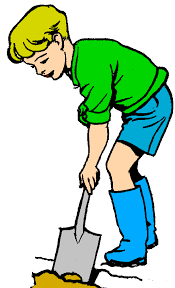
dig基本信息
读法:英 [dɪg] 美 [dɪɡ]
释义:
使用频率:★★★
星级词汇:★★★★
英英释义
Noun:
"she threw shafts of sarcasm"
"she takes a dig at me every chance she gets"
"turn over the soil for aeration"
"dig out a channel"
"Lexicographers drudge all day long"
"dig coal"
"dig your foot into the floor"
中英词源
dig 挖
来自PIE*dhigw, 刺,挖,词源同dike, ditch.WWw.WENTIYI.cOm
- dig
- dig: [13] The origins of dig are not altogether clear. It does not appear to have existed in Old English, although it has been speculated that there was an Old English verb *dīcigian, never recorded, derived from dīc ‘ditch’ (the standard Old English verbs for ‘dig’ were delfan and grafan, whence modern English delve and grave). Another theory is that it was borrowed from Old French diguer ‘make a dyke, hollow out the earth’. This was a derivative of the noun digue ‘dyke’, which itself was borrowed from a Germanic source that also produced Old English dīc (and indeed modern English dyke).
=> ditch, dyke - dig (v.)
- early 14c. (diggen), of uncertain origin, perhaps related to dike and ditch, either via Old French diguer (ultimately from a Germanic source), or directly from an unrecorded Old English word. Native words were deolfan (see delve), grafan (see grave (v.)).
Slang sense of "understand" first recorded 1934 in Black English, probably based on the notion of "excavate." A slightly varied sense of "appreciate" emerged 1939. Strong past participle dug appeared 16c., but is not etymological. Related: Digging. - dig (n.)
- late 17c. as "a tool for digging," from dig (v.). Meaning "archaeological expedition" is from 1896. Meaning "thrust or poke" (as with an elbow) is from 1819; figurative sense of this is from 1840.
词态变化
第三人称单数 digs;
过去式 dug;
过去分词 dug;
现在分词 digging;
权威造句
- 1. Dig a largish hole and bang the stake in first.
- 挖一个大点儿的洞,先把木桩敲进去。
来自柯林斯例句
- 2. Dig over any ground that is clear of crops and plants.
- 把没种庄稼和植物的土地都深翻一遍。
来自柯林斯例句
- 3. The dentist commenced to dig, drill and finally fill the offending tooth.
- 牙医开始在那颗有问题的牙齿上挖洞,钻孔,直到最后把它补好。
来自柯林斯例句
- 4. You would have to dig up the plant yourself.
- 你得自己把那株植物挖出来。
来自柯林斯例句
- 5. I grab George"sarm and dig my nails into his flesh.
- 我抓住乔治的胳膊,指甲抠进了他的肉里。
来自柯林斯例句
近反义词
v.
相似短语
单词分析
暂无,等待补充.
记忆方法
暂无,等待补充.
版权声明:问题易所有作品(图文、音视频)均来源网络,版权归原创作者所有,与本站立场无关,如不慎侵犯了你的权益,请联系我们告知,我们将做删除处理!