
clay基本信息
读法:英 [kleɪ] 美 [kle]
释义:
使用频率:★★
星级词汇:★★★★
英英释义
Noun:
"the end of the police search was the discovery of a corpse"
"the murderer confessed that he threw the stiff in the river"
"honor comes to bless the turf that wraps their clay"
中英词源
clay 黏土
来自PIE*glei,黏,粘,词源同cling,glue.
- clay
- clay: [OE] Clay is named from its consistency – its stickiness, its squidginess, its capacity for being smeared. Its ultimate source is the Indo- European base *gloi-, *glei-, *gli-, from which English also gets glue and gluten. From it was descended the Germanic base *klai-, on which was formed West Germanic *klaijō-. This passed into Old English as clæg – hence modern English clay. (Clammy comes from the same Germanic source, and clag, from which we get claggy ‘muddy’, is essentially the same word as clay, although it reached English via a Scandinavian route.)
=> clammy, clean - clay (n.)
- Old English clæg "stiff, sticky earth; clay," from Proto-Germanic *klaijaz (cognates: Old High German kliwa "bran," German Kleie, Old Frisian klai "clay," Old Saxon klei, Middle Dutch clei, Danish klæg "clay;" also Old English clæman, Old Norse kleima, Old High German kleiman "to cover with clay"), from PIE root *glei- "clay" (cognates: Greek gloios "sticky matter;" Latin gluten "glue;" Old Church Slavonic glina "clay," glenu "slime, mucus;" Old Irish glenim "I cleave, adhere").
in Scripture, the stuff from which the body of the first man was formed; hence "human body" (especially when dead). Clay pigeon is from 1888. Feet of clay "fundamental weakness" is from Dan. ii:33.
词态变化
复数 clays;
权威造句
- 1. As the wheel turned, the potter shaped the clay.
- 轮子一边转动,制陶工人一边拉坯。
来自柯林斯例句
- 2. The clay court was slippery and he was unable to move freely.
- 红土网球场很滑,他不能自如地移动。
来自柯林斯例句
- 3. When the clay feels like putty, it is ready to use.
- 黏土摸起来像油灰时,就可以用了。
来自柯林斯例句wwW.wenTiYi.cOM
- 4. He studied sculpture because he enjoyed working with clay.
- 他学习雕塑是因为他喜欢玩黏土。
来自柯林斯例句
- 5. Grace broke off a large piece of the clay.
- 格雷斯掰下来一大块土。
来自柯林斯例句
近反义词
相似短语
单词分析
这些名词都有“土地,土,泥”之意。earth多指地表带有水分的泥土,较具体。
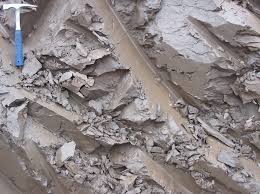
clay特指潮湿时发粘,而火烤后变坚硬的泥土。
dirt指地表的干松泥土。
land含义笼统。指与河流、海洋相对的陆地,也指可耕种的土地。
dust特指土壤干燥后,飞扬于空中的细微泥土。
soil特指适宜栽种农作物或生长各种植物的泥土。
mud指湿土,尤指雨后稀泥、污泥。
ground通常指大地的表面,也可指土壤、泥土或场地。
记忆方法
暂无,等待补充.
版权声明:问题易所有作品(图文、音视频)均来源网络,版权归原创作者所有,与本站立场无关,如不慎侵犯了你的权益,请联系我们告知,我们将做删除处理!