
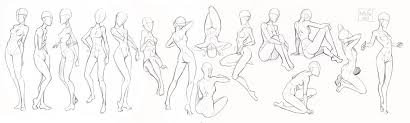
pose基本信息
读法:英 [pəʊz] 美 [poz]
释义:
使用频率:★★★
星级词汇:★★★★
英英释义
Noun:
"She postured and made a total fool of herself"
"Set the tray down"
"Set the dogs on the scent of the missing children"
"Place emphasis on a certain point"
"Got me--I don"t know the answer!"
"a vexing problem"
"This question really stuck me"
中英词源
pose 摆姿势,佯装,冒充
来自古法语poser,放置,提议,来自拉丁语pausare,停止,暂停,停歇,休息,词源同pause.同时,词义与另一个拉丁词ponere的过去分词positus相混淆并大量吸收了该词词义,来自ponere,放置,摆放,词源同position,component.引申词义摆出姿势,佯装,冒充等。
pose 提出,提问,造成威胁
缩写自oppose,对着放,反对。引申词义提问,造成威胁等。
- pose
- pose: [16] Pose and pause come ultimately from the same source. This was late Latin pausāre ‘stop, pause’. In Vulgar Latin it came to be associated with pōnere ‘put’, and particularly, owing to the similarity of form, with its past participle positum (source of English position), and gradually started to take over its meaning. Hence Old French poser, source of the English word, meant ‘put, place’. The noun pose is a modern acquisition from French, dating from the early 19th century.
=> pause - pose (v.1)
- late 14c., posen, "suggest (something is so), suppose, assume; grant, concede," from Old French poser "put, place, propose," a term in debating, from Late Latin pausare "to halt, rest, cease, pause" (source also of Italian posare, Spanish posar; see pause (v.)). The Late Latin verb also had a transitive sense, "cause to pause or rest," and hence the Old French verb (in common with cognates in Spanish, Italian, Portuguese) acquired the sense of Latin ponere (past participle positus) "to put, place," by confusion of the similar stems. Meaning "put in a certain position" in English is from early 15c. Sense of "assume a certain attitude" is from 1840; the transitive sense (as an artist"s model, etc.) is from 1859. Related: Posed; posing.
One of the most remarkable facts in F[rench] etymology is the extraordinary substitution whereby the Low Lat. pausare came to mean "to make to rest, to set," and so usurped the place of the Lat. ponere, to place, set, with which it has no etymological connection. And this it did so effectually as to restrict the F. pondre, the true equivalent of Lat. ponere, to the sense of "laying eggs;" whilst in all compounds it completely thrust it aside, so that compausare (i.e. F. composer) took the place of Lat. componere, and so on throughout. Hence the extraordinary result, that whilst the E. verbs compose, depose, impose, propose, &c. exactly represent in sense the Lat. componere, deponere, imponere, proponere, &c., we cannot derive the E. verbs from the Lat. ones since they have (as was said) no real etymological connection. [W.W. Skeat, "Etymological Dictionary of the English Language," 1898]
- pose (v.2)
- "to puzzle, confuse, perplex," 1590s, earlier "question, interrogate" (1520s), probably from Middle French poser "suppose, assume," from Old French poser "to put, place, set" (see pose (v.1)). Also in some cases a shortening of English appose "examine closely," and oppose. Related: Posed; posing.
- pose (n.)
- "act of posing the body," 1818, from pose (v.1), in a sense developed in the French cognate. Figuratively from 1884.
词态变化
第三人称单数 poses;
过去式 posed;
过去分词 posed;
现在分词 posing;
权威造句
- 1. She turned down £1.2 million to pose nude in Playboy.
- 她拒绝了为《花花公子》杂志拍摄裸照的120万英镑开价。
来自柯林斯例句
- 2. She"d flung herself in a pose of melodramatic exhaustion.
- 她一下子摆出一副筋疲力尽的夸张姿势。
来自柯林斯例句
- 3. The men support the ballerinas, who pose with their uplifted arms.
- 男演员托举着女芭蕾舞演员,她们在上面抬臂摆出造型。
来自柯林斯例句
- 4. How did you get him to pose for this picture?
- 你想了什么办法让他摆姿势照了这张照片?
来自柯林斯例句www.weNtiYi.cOM
- 5. Many women achievers appear to pose a threat to their male colleagues.
- 许多事业有成的女性似乎对她们的男同事构成了一种威胁。
来自柯林斯例句
近反义词
相似短语
单词分析
暂无,等待补充.
记忆方法
1. pos- + -e.
2. pose (v.1): put, place. => propose, suggest.
3. pose (v.2): put, place. => suppose, assume. => earlier "question, interrogate". => puzzle, confuse, perplex.
4. pose (n.): act of posing the body.
版权声明:问题易所有作品(图文、音视频)均来源网络,版权归原创作者所有,与本站立场无关,如不慎侵犯了你的权益,请联系我们告知,我们将做删除处理!