
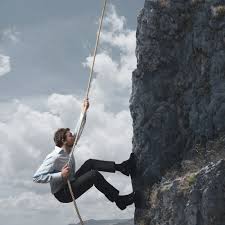
climb基本信息
读法:英 [klaɪm] 美 [klaɪm]
释义:
使用频率:★★★www.WEntiyi.cOM
星级词汇:★★★★★
英英释义
Noun:
"the value of our house rose sharply last year"
中英词源
climb 攀爬
来自PIE*glei,黏,粘,词源同clay,cling.形容爬的动作或吃力。插入字母b,见number.
- climb
- climb: [OE] The original notion contained in climb seems not to have been so much ‘ascent’ as ‘holding on’. Old English climban came from a prehistoric West Germanic *klimban, a nasalized variant of the base which produced English cleave ‘adhere’. To begin with this must have meant strictly ‘go up by clinging on with the hands and feet’ – to ‘swarm up’, in fact – but already by the late Old English period we find it being used for ‘rising’ in general. The original past tense clamb, which died out in most areas in the 16th century, is probably related to clamp ‘fastening’ [14].
=> clamp, cleave - climb (v.)
- Old English climban "raise oneself using hands and feet; rise gradually, ascend; make an ascent of" (past tense clamb, past participle clumben, clumbe), from West Germanic *klimban "go up by clinging" (cognates: Dutch klimmen "to climb," Old High German klimban, German klimmen). A strong verb in Old English, weak by 16c. Most other Germanic languages long ago dropped the -b. Meaning "to mount as if by climbing" is from mid-14c. Figurative sense of "rise slowly by effort" is from mid-13c. Related: Climbed; climbing.
- climb (n.)
- 1580s, "act of climbing," from climb (v.). Meaning "an ascent by climbing" is from 1915, originally in aviation.
词态变化
第三人称单数 climbs;
过去式 climbed;
过去分词 climbed;
现在分词 climbing;
权威造句
- 1. In an embarrassing climb-down, the Home Secretary lifted the deportation threat.
- 内务大臣尴尬地作出让步,解除了将其驱逐出境的威胁。
来自柯林斯例句
- 2. She started once again on the steep upward climb.
- 她又开始沿着陡峭的山路往上爬。
来自柯林斯例句
- 3. The boys lifted up their legs, indicating they wanted to climb in.
- 男孩们抬起腿,示意想要爬进来。
来自柯林斯例句
- 4. He went south to climb Taishan, a mountain sacred to the Chinese.
- 他南下去爬泰山了,那是中国人心目中一座神圣的山。
来自柯林斯例句
- 5. The economy is starting to climb out of recession.
- 经济开始走出衰退。
来自柯林斯例句
近反义词
相似短语
单词分析
这些动词均含有“攀登,上升”之意。ascend正式用词,指不用手攀,一直上升直到相当高的地方。
climb普通用词,含义广泛,侧重运用手足费力地攀登或上升,也可指抽象事物。
mount书面用词,词义与ascend相近,强调连续不断地向上移动、攀登或上涨。指骑马时用mount。 这些动词都有“爬”之意。
creep多指人或四足动物匍匐爬行,尤指偷偷地或不出声地缓慢向前爬行。也指植物的蔓延生长等。
climb通常指用手或足爬上或爬下,也指飞机、日、月的上升,还可用作比喻。
crawl指人或动物以身躯贴着地面缓慢地移动。
记忆方法
1. c- + limb(四肢).
2. 前面的C就像是攀爬时前肢合抱树干的姿势。
版权声明:问题易所有作品(图文、音视频)均来源网络,版权归原创作者所有,与本站立场无关,如不慎侵犯了你的权益,请联系我们告知,我们将做删除处理!