
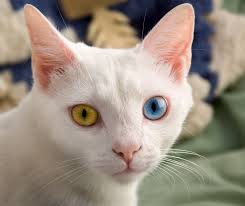
odd基本信息
读法:英 [ɒd] 美 [ɑd]
释义:
使用频率:★★★★
星级词汇:★★★★
英英释义
Adjective:
"her speech has a funny twang"
"they have some funny ideas about war"
"had an odd name"
"the peculiar aromatic odor of cloves"
"something definitely queer about this town"
"what a rum fellow"
"singular behavior"
"she had a little money left over so she went to a movie"
"some odd dollars left"
"saved the remaining sandwiches for supper"
"unexpended provisions"
中英词源
odd 奇数的,怪异的,偶然发生的
来自古诺斯语oddi,第三或多出的,来自Proto-Germanic*uzdaz,向上刺的点,顶角,来自PIE*uzdho,刺,刺点。后引申词义奇数的,怪异的,偶然发生的等。
- odd
- odd: [14] The etymological idea underlying odd is of ‘pointing upwards’. Its ultimate ancestor is a prehistoric Indo-European *uzdho-, a compound formed from *uz- ‘up’ and *dho- ‘put, place’ (source of English do). From the notion of a ‘pointed vertical object’ developed ‘triangle’, which in turn introduced the idea of ‘three’ and ‘one left over from two’, hence ‘indivisible by two’. This is the meaning odd had when English borrowed it from Old Norse oddi, and the modern sense ‘peculiar’ (as if the ‘odd one out’) did not emerge until the late 16th century.
=> do - odd (adj.)
- c. 1300, "constituting a unit in excess of an even number," from Old Norse oddi "third or additional number," as in odda-maðr "third man, odd man (who gives the casting vote)," odda-tala "odd number." The literal meaning of Old Norse oddi is "point of land, angle" (related via notion of "triangle" to oddr "point of a weapon"); from Proto-Germanic *uzdaz "pointed upward" (cognates: Old English ord "point of a weapon, spear, source, beginning," Old Frisian ord "point, place," Dutch oord "place, region," Old High German ort "point, angle," German Ort "place"), from PIE *uzdho- (cognates: Lithuanian us-nis "thistle"). None of the other languages, however, shows the Old Norse development from "point" to "third number." Used from late 14c. to indicate a surplus over any given sum.
Sense of "strange, peculiar" first attested 1580s from notion of "odd one out, unpaired one of three" (attested earlier, c. 1400, as "singular" in a positive sense of "renowned, rare, choice"). Odd job (c. 1770) is so called from notion of "not regular." Odd lot "incomplete or random set" is from 1897. The international order of Odd Fellows began as local social clubs in England, late 18c., with Masonic-type trappings; formally organized 1813 in Manchester.
词态变化
比较级 odder;
最高级 oddest;
名词 oddness;
权威造句
- 1. He smiled, an odd, dreamy smile that sent chills up my back.
- 他笑了,笑容古怪迷离,叫我后背发凉。
来自柯林斯例句
- 2. How odd life was, how unfathomable, how profoundly unjust.
- 生活多么离奇,多么莫测,多么不公啊!
来自柯林斯例句
- 3. These odd assertions were interpolated into the manuscript some time after 1400.
- 这些奇怪的论断是于1400年后的某个时间被加入手稿的。
来自柯林斯例句
- 4. Her Irish accent, after thirty-odd years in London, is undiluted.
- 她在伦敦呆了30多年,爱尔兰口音仍很浓重。
来自柯林斯例句
- 5. He was definitely a bit of an odd bod.
- 他这人确实有点怪。
来自柯林斯例句
近反义词
相似短语
单词分析
这些形容词均含有“奇怪的,奇异的,新奇的”之意。queer指一种无法解释的怪诞,强调事物的奇特和不可思议。
odd通常指不规律、偶尔出现的人或事物,往往令人困惑或奇怪。
funny较通俗用词,指奇怪得滑稽可笑或反常。
crazy多指与众不同的行为、外表或人与物本身,含荒唐可笑或神经不正常的意味。
curious通常指非常特别或能引起注意、研究或探索的奇特。
peculiar侧重令人奇怪的或独一无二的特性,也指性格特征方面显著的与众不同之处。
strange普通常用词,含义广泛,指陌生新奇、奇怪、奇怪或不自然的人或物。
eccentric指偏离常规的怪异或怪癖。
quaint指古色古香,会人感到既奇怪又有趣。
singular通常指异常或奇特,暗含不同于一般。
记忆方法
暂无,等待补充.
版权声明:问题易所有作品(图文、音视频)均来源网络,版权归原创作者所有,与本站立场无关,如不慎侵犯了你的权益,请联系我们告知,我们将做删除处理!