
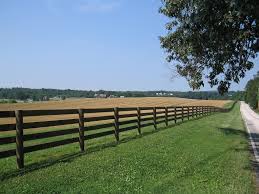
fence基本信息
读法:英 [fens] 美 [fɛns]
释义:
使用频率:★★★
星级词汇:★★★★
英英释义
Noun:
中英词源
fence 隔开,击剑,篱笆wWW.weNtIYi.coM
缩写自defence或defense, 挡开。引申义击剑,篱笆等。
- fence
- fence: [14] Fence is short for defence, and indeed until the 16th century meant ‘defence’ (‘Yet, for [that is, despite] the fence that he could make, she struck it from his hand’, Felon Sowe Rokeby 1500). Of its present-day meanings, ‘enclosing structure’ (originally a ‘defence’ against intruders) and ‘sword-fighting’ (originally the use of a sword for ‘self-defence’, now used only as a verb) developed in the 16th century.
The sense ‘dealer in stolen property’ came along in the 17th century; it arose from the notion that such transactions are carried out under the cover, or ‘defence’, of secrecy. Similarly, fend [13] and fender [15] came by loss of the initial syllable from defend.
=> defence, fend, fender - fence (n.)
- early 14c., "action of defending, resistance; means of protection, fortification," shortening of defens (see defense). The same pattern also yielded fend, fender; and obsolete fensive "defensive" (late 16c.). Spelling alternated between -c- and -s- in Middle English. Sense of "enclosure" is first recorded mid-15c. on notion of "that which serves as a defense." Sense of "dealer in stolen goods" is thieves" slang, first attested c. 1700, from notion of such transactions taking place under defense of secrecy.
To be figuratively on the fence "uncommitted" is from 1828, perhaps from the notion of spectators at a fight, or a simple literal image: "A man sitting on the top of a fence, can jump down on either side with equal facility." [Bartlett, "Dictionary of Americanisms," 1848]. - fence (v.)
- early 15c., "defend" (oneself); mid-15c. as "protect with a hedge or fence;" from fence (n.). From 1590s as "fight with swords," from the noun in this sense (1530s); see fencing. From 1610s as "knowingly buy or sell stolen goods." Related: Fenced.
词态变化
复数 fences;
第三人称单数 fences;
过去式 fenced;
过去分词 fenced;
现在分词 fencing;
权威造句
- 1. He squeezed through a narrow opening in the fence.
- 他从围栏上的狭窄缺口里挤了过去。
来自柯林斯例句
- 2. The first task was to fence the wood to exclude sheep.
- 第一项任务就是把树林围起来不让羊进去。
来自柯林斯例句
- 3. The small churchyard was surrounded by a rusted wrought-iron fence.
- 不大的教堂墓地周边围着一圈生锈的熟铁栅栏。
来自柯林斯例句
- 4. Villagers say the fence would restrict public access to the hills.
- 村民们说这个围栏将限制公众进入山区。
来自柯林斯例句
- 5. He was putting up a new fence at his home.
- 他正在为自己家搭建新的篱笆墙。
来自柯林斯例句
近反义词
n.
相似短语
单词分析
这些动词均有“包围”之意。enclose指把某物四周围住或封闭起来,使之与外界隔绝。
encircle侧重在某事物周围围成圈状。
envelop着重指把某个物体完全包起来或整个封起来。
fence通常指用栅栏栏开或围起来。
surround普通用词,既可指环绕、围绕,也可指军事上的包围。
记忆方法
1. defence => fence.
版权声明:问题易所有作品(图文、音视频)均来源网络,版权归原创作者所有,与本站立场无关,如不慎侵犯了你的权益,请联系我们告知,我们将做删除处理!