
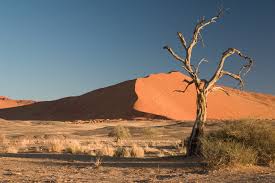
desert基本信息
读法:英 ["dezət; dɪ"zɜːt] 美 ["dɛzɚt]
释义:
使用频率:★★★
星级词汇:★★★★
英英释义
Noun:
中英词源
desert 沙漠
de-, 不,非,使相反。-sert, 连接,词源同series, insert. 即断开连接,逃离,遗弃,引申词义被遗弃的地方,沙漠。
- desert
- desert: English has three distinct words desert, which come from two separate sources. Desert ‘what one deserves’ [13] (now usually used in the plural) is related, as its meaning suggests, to the verb deserve. It comes from Old French desert or deserte, which were formed from the past participle of deservir ‘deserve’. (Dessert ‘sweet course’ [17] is its first cousin, coming from French desservir ‘clear the table’ – literally ‘unserve’ – a compound verb formed, like deserve, from the verb serve but with the prefix dis- rather than de-.) The noun desert ‘barren region’ [13] and the verb desert ‘abandon’ [15] both come ultimately from dēsertus, the past participle of Latin dēserere ‘abandon’.
This was a compound verb formed from the prefix dē- denoting reversal and serere ‘join’ (a derivative of which gave English ‘serried ranks’).
=> serve; serried - desert (v.)
- "to leave one"s duty," late 14c., from Old French deserter (12c.) "leave," literally "undo or sever connection," from Late Latin desertare, frequentative of Latin deserere "to abandon, to leave, forsake, give up, leave in the lurch," from de- "undo" (see de-) + serere "join together, put in a row" (see series). Military sense is first recorded 1640s. Related: Deserted; deserting.
- desert (n.1)
- "wasteland," early 13c., from Old French desert (12c.) "desert, wilderness, wasteland; destruction, ruin," from Late Latin desertum (source of Italian diserto, Old Provençal dezert, Spanish desierto), literally "thing abandoned" (used in Vulgate to translate "wilderness"), noun use of neuter past participle of Latin deserere "forsake" (see desert (v.)).
Sense of "waterless, treeless region" was in Middle English and gradually became the main meaning. Commonly spelled desart in 18c., which is not etymological but at least avoids confusion with the other two senses of the word. Classical Latin indicated this idea with deserta, plural of desertus. - desert (n.2)
- "suitable reward or punishment" (now usually plural and with just), c. 1300, from Old French deserte, noun use of past participle of deservir "be worthy to have," ultimately from Latin deservire "serve well" (see deserve).
词态变化
复数 deserts;
第三人称单数 deserts;
过去式 deserted;
过去分词 deserted;
现在分词 deserting;
权威造句
- 1. The vehicles have been modified to suit conditions in the desert.
- 车辆已改装过以适应沙漠的环境。
来自柯林斯例句
- 2. The paper"sprice rise will encourage readers to desert in even greater numbers.
- 报纸价格的上涨将导致更多的读者不再订阅。
来自柯林斯例句
- 3. Young workers are more willing to desert jobs they don"t like.
- 年轻职工对不喜欢的工作更易擅自离职。
来自柯林斯例句
- 4. Frank Mariano negotiates the desert terrain in his battered pickup.
- 弗兰克·马里亚诺驾驶他那辆破烂不堪的皮卡车成功穿越了沙漠地带。
来自柯林斯例句WwW.weNtIyi.COm
- 5. The diamond towns are gradually being reclaimed by the desert.
- 这些钻石城镇正逐渐重归沙漠。
来自柯林斯例句
近反义词
n.
相似短语
单词分析
这些动词或词组均含“抛弃、放弃”之意abandon强调永远或完全放弃或抛弃人或事物等,这可能是被迫的,也可能是自愿的。
desert着重指违背法律责任和义务,或自己的信仰与誓言的行为,多含非难的意味。
forsake侧重断绝感情上的依恋,自愿抛弃所喜欢的人或物。也指抛弃信仰或改掉恶习。
leave普通用词,指舍弃某事或某一职业,或终止同一某人的关系,但不涉及动机与果。
give up普通用语,侧重指没有希望或因外界压力而放弃。
记忆方法
暂无,等待补充.
版权声明:问题易所有作品(图文、音视频)均来源网络,版权归原创作者所有,与本站立场无关,如不慎侵犯了你的权益,请联系我们告知,我们将做删除处理!