
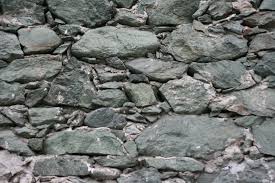
stone基本信息
读法:英 [stəʊn] 美 [ston]
释义:
使用频率:★★★★
星级词汇:★★★★★
英英释义
Noun:
"stone is abundant in New England and there are many quarries"
"she had jewels made of all the rarest stones"
"her face was as hard as stone"
中英词源
stone 石头,石块
来自古英语 stan,石头,来自 Proto-Germanic*stainaz,石头,来自 PIE*stai,硬化,石头,词源 同 stearin,硬脂,硬脂酸甘油油酯。
- stone
- stone: [OE] Stone is a general Germanic word, with relatives in German stein, Dutch steen, and Swedish and Danish sten. These all go back to a prehistoric *stainaz, which was derived from a base denoting ‘stiffness’ or ‘solidity’ (source also of Greek stía ‘pebble’ and stéar ‘stiff, fat’, Sanskrit styā- ‘stiffen’, and Serbo-Croat stijena ‘rock’). The use of the English term for a measure of weight, equal to fourteen pounds, dates from the 14th century.
- stone (n.)
- Old English stan, used of common rocks, precious gems, concretions in the body, memorial stones, from Proto-Germanic *stainaz (cognates: Old Norse steinn, Danish steen, Old Saxon sten, Old Frisian sten, Dutch steen, Old High German stein, German Stein, Gothic stains), from PIE *stoi-no-, suffixed form of root *stai- "stone," also "to thicken, stiffen" (cognates: Sanskrit styayate "curdles, becomes hard;" Avestan stay- "heap;" Greek stear "fat, tallow," stia, stion "pebble;" Old Church Slavonic stena, Russian stiena "wall").
Sense of "testicle" is from late Old English. The British measure of weight (usually equal to 14 pounds) is from late 14c., originally a specific stone. Stone-fruit, one with a pit, is from 1520s. Stone"s throw for "a short distance" is attested from 1580s. Stone Age is from 1864. To kill two birds with one stone is first attested 1650s. To leave no stone unturned is from 1540s. - stone (adj.)
- "made of stone," Old English (which also had stænan "stonen"); see stone (n.). As an intensifying adjective recorded from 1935, first recorded in black slang, probably from earlier use in phrases like stone blind (late 14c., literally "blind as a stone"), stone deaf, stone-cold (1590s), etc. Stone cold sober dates from 1937.
- stone (v.)
- c. 1200, "to pelt with stones," from stone (n.). From c. 1600 as "to fit with stones;" 1630s as "to free from stones" (of fruit, etc.). Related: Stoned; stoning.
词态变化
复数 stones;
第三人称单数 stones;
过去式 stoned;
现在分词 stoning;
wwW.WENtiYI.Com
权威造句
- 1. He lost two stone in weight during his time there.
- 他在那儿的时候体重下降了2英石。
来自柯林斯例句
- 2. She strove to read the name on the stone pillar.
- 她费劲地读着石柱上的名字。
来自柯林斯例句
- 3. A flight of stone steps leads to the terrace.
- 一段石阶通向露台。
来自柯林斯例句
- 4. I waved goodbye and went down the stone harbour steps.
- 我挥手告别,然后走下港口石阶。
来自柯林斯例句
- 5. Wilde fell and struck his head on the stone floor.
- 怀尔德摔倒了,头撞在石头地上。
来自柯林斯例句
近反义词
相似短语
单词分析
这些名词均有“宝石”之意。jewel多指贵重的宝石,是经过切削打磨,通常镶嵌在胸针、项链或其它装饰物上的玉。
jewellery是珠宝的总称,泛指各类珠宝,既指佩带或衣服的珠宝饰物,又指用普通金属、塑料或假宝石制作的装饰物。
stone特别强调稀少罕见或值钱的矿物。
gem指经切割、磨光的宝石,引申指珍品、佳作。
记忆方法
谐音“石头”
版权声明:问题易所有作品(图文、音视频)均来源网络,版权归原创作者所有,与本站立场无关,如不慎侵犯了你的权益,请联系我们告知,我们将做删除处理!