
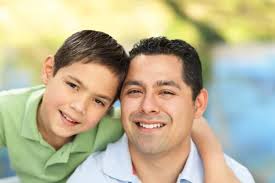
father基本信息
读法:英 ["fɑːðə] 美 ["fɑðɚ]
释义:
使用频率:★★★★★
星级词汇:★★★★★
英英释义
Noun:
"the city fathers endorsed the proposal"
"Men often father children but don"t recognize them"
中英词源
father 父亲
来自PIE*pater, 父亲,通常认为是来自婴儿最早能发的音pa,词源同pope, paternal.
- father
- father: [OE] Father is the English representative of a general Indo-European family of words for ‘male parent’. Its ancestor is Indo-European pətér, which probably originated (like the words for ‘mother’, and indeed like English daddy and papa and Welsh tad ‘father’) in prearticulate syllables interpreted by proud parents as words. Its multifarious descendants include Greek patér, Latin pater (whence French père, Italian and Spanish padre – borrowed into English in the 16th century – and English pater, paternal, patriarch, patrician, patriot, and patron), Irish athair, Armenian hayr, German vater, Dutch vader, Swedish and Danish fader, and English father.
A less obvious relation is perpetrate [16]; this comes ultimately from Latin perpetrāre, a derivative of the verb patrāre, which originally meant literally ‘perform or accomplish in the capacity of a father’.
=> paternal, patriot, patron, perpetrate - father (n.)
- Old English fæder "he who begets a child, nearest male ancestor;" also "any lineal male ancestor; the Supreme Being," and by late Old English, "one who exercises parental care over another," from Proto-Germanic *fader (cognates: Old Saxon fadar, Old Frisian feder, Dutch vader, Old Norse faðir, Old High German fatar, German vater; in Gothic usually expressed by atta), from PIE *pəter- "father" (cognates: Sanskrit pitar-, Greek pater, Latin pater, Old Persian pita, Old Irish athir "father"), presumably from baby-speak sound "pa." The ending formerly was regarded as an agent-noun affix.
My heart leaps up when I behold
The classic example of Grimm"s Law, where PIE "p-" becomes Germanic "f-." Spelling with -th- (15c.) reflects widespread phonetic shift in Middle English that turned -der to -ther in many words, perhaps reinforced in this case by Old Norse forms; spelling caught up to pronunciation in 1500s (compare mother (n.), weather (n.)). As a title of various Church dignitaries from c. 1300; meaning "creator, inventor, author" is from mid-14c.; that of "anything that gives rise to something else" is from late 14c. As a respectful title for an older man, recorded from 1550s. Father-figure is from 1954. Fathers "leading men, elders" is from 1580s.
A rainbow in the sky:
So was it when my life began;
So is it now I am a man;
So be it when I shall grow old,
Or let me die!
The Child is father of the Man;
I could wish my days to be
Bound each to each by natural piety.
[Wordsworth, 1802] - father (v.)
- c. 1400, from father (n.). Related: Fathered; fathering.
词态变化
复数 fathers;
第三人称单数 fathers;
过去式 fathered;
过去分词 fathered;
现在分词 fathering;
权威造句
- 1. I denied my father because I wanted to become someone else.
- 我和父亲断绝了关系,因为我想成为一个不一样的自己。
来自柯林斯例句
- 2. Derek is now the proud father of a bouncing baby girl.
- 德里克现在为有一个健康活泼的女宝宝而骄傲。
来自柯林斯例句
- 3. There was a long silence, and my father looked shamefaced.
- 沉默持续了很长时间,而我父亲看上去面带愧色。
来自柯林斯例句
- 4. Father had no more than a superficial knowledge of music.
- 父亲对音乐只懂一点皮毛。
来自柯林斯例句
- 5. At seventeen, Daniele was told to leave home by her father.
- 达妮埃尔17岁时,父亲让她离开了家。
来自柯林斯例句
近反义词
相似短语
单词分析
暂无,等待补充.
记忆方法
暂无,等待补充.
版权声明:问题易所有作品(图文、音视频)均来源网络,版权归原创作者所有,与本站立场无关,如不慎侵犯了你的权益,请联系我们告知,我们将做删除处理!