
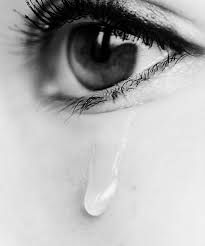
tear基本信息
读法:英 [tɪə] 美 [tɛr]
释义:
使用频率:★★★★
星级词汇:★★★★★wWw.weNtiYI.COm
英英释义
Noun:
"she had snags in her stockings"
"tear the paper"
"He came charging into my office"
"pluck the capon"
中英词源
tear 眼泪
来自古英语 tear,眼泪,来自 Proto-Germanic*tagr,眼泪,来自 PIE*dakru,眼泪,词源同 lachrymose, 流泪的。字母 d,l 音变,中间字母 g 脱落。
tear 撕裂,撕碎
来自古英语teran,撕碎,撕扯,来自Proto-Germanic*teran,撕碎,撕扯,来自PIE*der,撕开, 皮肤,词源同dermis,dermotology,turd.可能来自PIE*da,分开,词源同deal,time.
- tear
- tear: English has two separate words tear, both of ancient ancestry. The sort of tear that one weeps [OE] goes back (together with its Germanic relatives German träne, Dutch traan, Swedish tår, and Danish taare) to prehistoric Indo- European *dakru-, a word of uncertain origin which also produced Welsh deigryn and Latin lacrima (source of English lachrymal [16] and lachrymose [17]). Tear ‘rip’ [OE] comes from an Indo- European base *der- ‘tear’, which also produced Russian drat’ and Polish drzeć ‘tear’.
The base *der- denoted the concept of ‘flaying’ as well as ‘tearing’, in which sense it produced English turd and Greek dérma ‘skin’ (source of English dermatitis, epidermis, etc).
=> lachrymose; dermatitis, epidermis, turd - tear (n.1)
- "fluid drop from the eye," Old English tear "tear, drop, nectar, what is distilled in drops," from earlier teahor, tæhher, from Proto-Germanic *tahr-, *tagr- (cognates: Old Norse, Old Frisian tar, Old High German zahar, German Zähre, Gothic tagr "tear"), from PIE *dakru- (cognates: Latin lacrima, Old Latin dacrima, Irish der, Welsh deigr, Greek dakryma). To be in tears "weeping" is from 1550s. Tear gas first recorded 1917.
- tear (n.2)
- "act of ripping or rending," 1660s, from tear (v.1). Old English had ter (n.) "tearing, laceration, thing torn."
- tear (v.1)
- "pull apart," Old English teran "to tear, lacerate" (class IV strong verb; past tense tær, past participle toren), from Proto-Germanic *teran (cognates: Old Saxon terian, Middle Dutch teren "to consume," Old High German zeran "to destroy," German zehren, Gothic ga-tairan "to tear, destroy"), from PIE *der- (2) "to split, peel, flay," with derivatives referring to skin and leather (cognates: Sanskrit drnati "cleaves, bursts," Greek derein "to flay," Armenian terem "I flay," Old Church Slavonic dera "to burst asunder," Breton darn "piece").
The Old English past tense survived long enough to get into Bible translations as tare before giving place 17c. to tore, which is from the old past participle toren. Sense of "to pull by force" (away from some situation or attachment) is attested from late 13c. To be torn between two things (desires, loyalties, etc.) is from 1871. - tear (v.2)
- early 15c., "shed tears," 1650s, "fill with tears" mainly in American English, from tear (n.1). Related: Teared; tearing. Old English verb tæherian, tearian "to weep" did not survive into Middle English.
词态变化
复数 tears;
第三人称单数 tears;
过去式 tore;
过去分词 torn;
现在分词 tearing;
权威造句
- 1. I stared at the man, couldn"t tear my eyes away.
- 我盯着那个人看,视线无法移开。
来自柯林斯例句
- 2. The city will tear down the building and create a park.
- 该市将拆掉这幢大楼,在这儿建个公园。
来自柯林斯例句
- 3. A muscle tear will leave a scar after healing.
- 肌肉撕裂复原后会留下疤痕。
来自柯林斯例句
- 4. I peered through a tear in the van"s curtains.
- 我通过篷车帘子的破洞窥视。
来自柯林斯例句
- 5. Troops used tear gas and rifle butts to break up the protests.
- 军队使用催泪瓦斯和枪托驱散示威者。
来自柯林斯例句
近反义词
v.
相似短语
单词分析
这些动词均有“撕裂、扯破”之意。tear最普通用词,指有意或无意地把布或纸等没接缝的材料撕开。可作引申用。
rip侧重指用力把布料等物撕开,也可指用粗暴手段把某物撕裂。
split非正式用词,指有力的切断、劈开或撕裂的动作。
记忆方法
暂无,等待补充.
版权声明:问题易所有作品(图文、音视频)均来源网络,版权归原创作者所有,与本站立场无关,如不慎侵犯了你的权益,请联系我们告知,我们将做删除处理!