
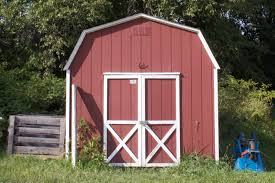
shed基本信息
读法:英 [ʃed] 美 [ʃɛd]
释义:
使用频率:★
星级词汇:★★★★
英英释义
Noun:
"the caducous calyx of a poppy"
"shed your clothes"
"spill blood"
"God shed His grace on Thee"
中英词源
shed 工棚,厂房
来自 shade 拼写变体,引申词义简易遮盖地,工棚,厂房。
shed 去除,摆脱,蜕,落
来自古英语 sceadan,分开,来自 Proto-Germanic*skaith,分开,劈开,来自 PIE*skei,切,分开, 词源同 segment,section.引申诸相关比喻义。
- shed
- shed: English has two distinct words shed. The verb [OE] originally meant ‘divide, separate, split’ (a 14th-century religious poem paraphrased Genesis with ‘the sun to shed the day from the night’), and the modern range of senses, ‘give off, drop’, did not begin to emerge until the Middle English period. It goes back to a prehistoric Germanic *skaithan, which also produced German and Dutch scheiden ‘separate’.
This was derived from a base *skaith- ‘divide, split’, source also of English ski and probably sheath. Shed ‘hut’ [15] may be an alteration of shade (but the shed of watershed is of course a noun use of the verb shed).
=> sheath, ski; shade - shed (n.)
- "building for storage," 1855, earlier "light, temporary shelter" (late 15c., shadde), possibly a dialectal variant of a specialized use of shade (n.). Originally of the barest sort of shelter. Or from or influenced in sense development by Middle English schudde (shud) "a shed, hut."
- shed (v.)
- "cast off," Old English sceadan, scadan "to divide, separate, part company; discriminate, decide; scatter abroad, cast about," strong verb (past tense scead, past participle sceadan), from Proto-Germanic *skaithan (cognates: Old Saxon skethan, Old Frisian sketha, Middle Dutch sceiden, Dutch scheiden, Old High German sceidan, German scheiden "part, separate, distinguish," Gothic skaidan "separate"), from *skaith "divide, split."
According to Klein"s sources, this probably is related to PIE root *skei- "to cut, separate, divide, part, split" (cognates: Sanskrit chid-, Greek skhizein, Latin scindere "to split;" Lithuanian skedzu "I make thin, separate, divide;" Old Irish scian "knife;" Welsh chwydu "to break open"). Related: Shedding. A shedding-tooth (1799) was a milk-tooth or baby-tooth.
In reference to animals, "to lose hair, feathers, etc." recorded from c. 1500; of trees losing leaves from 1590s; of clothes, 1858. This verb was used in Old English to gloss Late Latin words in the sense "to discriminate, to decide" that literally mean "to divide, separate" (compare discern). Hence also scead (n.) "separation, distinction; discretion, understanding, reason;" sceadwisnes "discrimination, discretion."
词态变化
复数 sheds;
第三人称单数 sheds;
过去式 shed;
过去分词 shed;
现在分词 shedding;
权威造句
- 1. The three of us manhandled the uncovered dinghy out of the shed.
- 我们三个人把无篷小划艇推出了棚子。
来自柯林斯例句
- 2. He made his way along a well-trodden path towards the shed.
- 他顺着一条常有人走的小路走向小屋。
来自柯林斯例句
- 3. As rural factories shed labour, people drift towards the cities.
- 由于农村的工厂纷纷裁员,人们逐渐流向城市。
来自柯林斯例句
- 4. I trotted down the steps and out to the shed.
- 我小步跑下台阶,奔向外面的小屋。
来自柯林斯例句
- 5. Gunmen in Ulster shed the first blood of the new year.
- 阿尔斯特的持枪歹徒制造了新一年的首起流血事件。
来自柯林斯例句Www.WEnTiyI.Com
近反义词
相似短语
单词分析
这些动词都有“抛弃、丢弃”之意。discard指把具体的东西抛掉不要,着重扔、丢的动作。
scrap指抛弃过时不再有用的东西。
shed指毛发、皮肤、叶等经过某种自然的过程而脱落。 这些名词均含有“小屋”之意。
cabin多指建造粗糙的简陋小木屋,也指旅客或船员住的船舱。现在也指节假日游游者的简便住房。
cottage指穷苦人住的乡间小茅屋。现在也指雅致的小住宅,在美国可指别墅。
hut多指供居住或遮避风雨的简易小屋。
shed一般指四壁没有完全封闭,供牲畜用或储藏东西、停放车辆等的简易棚屋。
记忆方法
shed [ʃed] 使泻出——泻
2. shade => shed.
版权声明:问题易所有作品(图文、音视频)均来源网络,版权归原创作者所有,与本站立场无关,如不慎侵犯了你的权益,请联系我们告知,我们将做删除处理!