
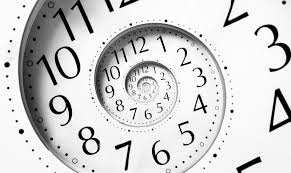
time基本信息
读法:英 [taɪm] 美 [taɪm]
释义:
使用频率:★★★★★
星级词汇:★★★★★
英英释义
Noun:
"he called four times"
"he could do ten at a clip"
"I didn"t have time to finish"
"it took more than half my time"
"the time of year for planting"
"he was a great actor in his time"
"they had a good time together"
"the time is 10 o"clock"
"his sentence was 5 to 10 years"
"he is doing time in the county jail"
中英词源
time 时间,时刻,时代,节拍,拍子,次,回WwW.wENTiYi.com
来自古英语 tima,一段时间,限时,来自 Proto-Germanic*timon,一段时间,来自 PIE*di-mon, 来自*da,分开,切分,词源同 tide,democracy,*mon,名词后缀,即-men,-ment.后引申诸相关词 义,并由一段时间引申词义次,回。
- time
- time: [OE] Time originally denoted ‘delimited section of existence, period’. Its ultimate source is the Indo-European base *dī- ‘cut up, divide’. This passed into prehistoric Germanic as *tī- (source also of English tide), and addition of the suffix *-mon- produced *tīmon – whence English time and Swedish timme ‘hour’. The application of the word to the more generalized, abstract notion of ‘continuous duration’ dates from the 14th century.
=> tide - time (n.)
- Old English tima "limited space of time," from Proto-Germanic *timon- "time" (cognates: Old Norse timi "time, proper time," Swedish timme "an hour"), from PIE *di-mon-, suffixed form of root *da- "cut up, divide" (see tide (n.)).
Abstract sense of "time as an indefinite continuous duration" is recorded from late 14c. Personified since at least 1509 as an aged bald man (but with a forelock) carrying a scythe and an hour-glass. In English, a single word encompasses time as "extent" and "point" (French temps/fois, German zeit/mal) as well as "hour" (as in "what time is it?" compare French heure, German Uhr). Extended senses such as "occasion," "the right time," "leisure," or times (v.) "multiplied by" developed in Old and Middle English, probably as a natural outgrowth of such phrases as "He commends her a hundred times to God" (Old French La comande a Deu cent foiz).to have a good time ( = a time of enjoyment) was common in Eng. from c 1520 to c 1688; it was app. retained in America, whence readopted in Britain in 19th c. [OED]
Time of day (now mainly preserved in negation, i.e. what someone won"t give you if he doesn"t like you) was a popular 17c. salutation (as in "Good time of day vnto your Royall Grace," "Richard III," I.iii.18), hence to give (one) the time of day "greet socially" (1590s); earlier was give good day (mid-14c.). The times "the current age" is from 1590s. Behind the times "old-fashioned" is recorded from 1831. Times as the name of a newspaper dates from 1788.
Time warp first attested 1954; time-traveling in the science fiction sense first recorded 1895 in H.G. Wells" "The Time Machine." Time capsule first recorded 1938, in reference to the one "deemed capable of resisting the effects of time for five thousand years preserving an account of universal achievements embedded in the grounds of the New York World"s fair."Jones [archaeologist of A.D. 5139] potters about for a while in the region which we have come to regard as New York, finds countless ruins, but little of interest to the historian except a calcified direction sheet to something called a "Time Capsule." Jones finds the capsule but cannot open it, and decides, after considerable prying at the lid, that it is merely evidence of an archaic tribal ceremony called a "publicity gag" of which he has already found many examples. ["Princeton Alumni Weekly," April 14, 1939]
To do time "serve a prison sentence" is from 1865. Time frame is attested by 1964; time-limit is from 1880. About time, ironically for "long past due time," is recorded from 1920. - time (v.)
- Old English getimian "to happen, befall," from time (n.). Meaning "to appoint a time" (of an action, etc.) is attested from c. 1300; sense of "to measure or record the time of" (a race, event, etc.) is first attested 1660s. Related: Timed; timing.
词态变化
复数 times;
第三人称单数 times;
过去式 timed;
现在分词 timing;
权威造句
- 1. The " e " in " time " is a silent letter.
- time中的e不发音.
来自《简明英汉词典》
- 2. She studied him for the longest time, looking wryly amused.
- 她面带苦笑,盯着他看了很长时间。
来自柯林斯例句
- 3. In her spare time she read books on cooking.
- 业余时间里她看一些烹饪方面的书籍。
来自柯林斯例句
- 4. She spent a period of time working with people dying of cancer.
- 她有一段时间曾帮助垂危的癌症患者。
来自柯林斯例句
- 5. Mark had for some time been making advances towards her.
- 马克追她已经有一段时间了。
来自柯林斯例句
近反义词
相似短语
单词分析
暂无,等待补充.
记忆方法
暂无,等待补充.
版权声明:问题易所有作品(图文、音视频)均来源网络,版权归原创作者所有,与本站立场无关,如不慎侵犯了你的权益,请联系我们告知,我们将做删除处理!