
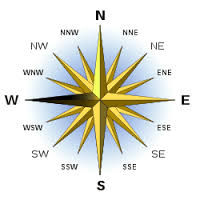
west基本信息
读法:英 [west] 美 [wɛst]
释义:
使用频率:★★★★★
星级词汇:★★★★★
英英释义
Noun:
"situated west of Boston"
中英词源
west 西方
缩写PIE*wes-pero,黄昏,晚上,词源同vesper,来自PIE*we,下降,落下,引申义太阳落山的方向,即西方。
- west
- west: [OE] Etymologically, the west may be the direction in which the sun goes ‘down’. Together with German and Dutch west, Swedish väster, and Danish vest, it comes from a prehistoric Germanic *westaz. This in turn was descended from the Indo-European base *wes-, which also produced Latin vesper (source of English vespers) and Greek hesperos ‘evening’ and was related to Sanskrit avas ‘down’. French ouest and Spanish oeste were borrowed from English west, Romanian vest from German west.
=> vespers - west
- Old English west (adv.) "in or toward the west, in a westerly direction," from Proto-Germanic *west- (cognates: Old Norse vestr, Old Frisian, Middle Dutch, Dutch west, Old High German -west, only in compounds, German west), from PIE *wes-, reduced form of *wes-pero- "evening, night" (cognates: Greek hesperos, Latin vesper "evening, west;" see vesper). Compare also High German dialectal abend "west," literally "evening." French ouest, Spanish oeste are from English.
As an adjective from late 14c.; as a noun from late 12c. West used in geopolitical sense from World War I (Britain, France, Italy, as opposed to Germany and Austria-Hungary); as contrast to Communist Russia (later to the Soviet bloc) it is first recorded in 1918. West Coast of the U.S. is from 1850; West End of London is from 1776; West Side of Manhattan is from, 1858. The U.S. West "western states and territories" originally (1790s) meant those just west of the Alleghenies; the sense gradually extended as the country grew. To go west "die" was "common during the Great War" [OED, 2nd ed.], perhaps from Celtic imagery or from the notion of the setting sun. In U.S. use, in a literal sense "emigrate to the western states or territories," from 1830.
词态变化
权威造句
- 1. Big credits were given to East Germany by successive West German governments.
- 历届西德政府给予东德大量的贷款。
来自柯林斯例句wWW.wEnTIYi.cOM
- 2. He was headmaster of a public school in the West of England.
- 他是英格兰西部一所公学的校长。
来自柯林斯例句
- 3. The government counted 27,600,000 employed persons in West Germany.
- 据政府统计,西德当时的就业人数为2,760万人。
来自柯林斯例句
- 4. For a beach resort with a difference, try Key West.
- 如果想去一个与众不同的海滨度假胜地,那就去基韦斯特吧。
来自柯林斯例句
- 5. West was wilfully blind to the abuse that took place.
- 韦斯特对发生的虐待行为故意视而不见。
来自柯林斯例句
近反义词
相似短语
单词分析
暂无,等待补充.
记忆方法
暂无,等待补充.
版权声明:问题易所有作品(图文、音视频)均来源网络,版权归原创作者所有,与本站立场无关,如不慎侵犯了你的权益,请联系我们告知,我们将做删除处理!