
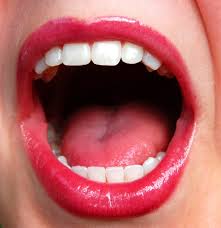
mouth基本信息
读法:英 [maʊθ] 美 [maʊθ]
释义:
使用频率:★★★★
星级词汇:★★★★★
英英释义
Noun:
"they built a fire at the mouth of the cave"
"This depressed patient does not verbalize"
中英词源
mouth 嘴,口
来自古英语muth,嘴,开口,门,洞,来自Proto-Germanic*munthaz,来自PIE*ment,嘴,颌, 词源同mandible,masticate.鼻音n 脱落,比较dental,tooth.
- mouth
- mouth: [OE] Mouth is part of a general Germanic family of ‘mouth’-words that go back to a prehistoric *munthaz: its modern relatives include German and Danish mund, Dutch mond, and Swedish mun. The loss of the nasal consonant is part of a general phenomenon that happened in primitive Old English (and also in Old Frisian and Old Saxon) whose effects can be seen also in goose (beside German gans) and tooth (beside German zahn). It is thought that *munthaz itself comes from the same Indo- European source as produced Latin mentum ‘chin’.
- mouth (n.)
- Old English muþ "mouth, opening, door, gate," from Proto-Germanic *munthaz (cognates: Old Saxon, Old Frisian muth, Old Norse munnr, Danish mund, Middle Dutch mont, Dutch mond, Old High German mund, German Mund, Gothic munþs "mouth"), with characteristic loss of nasal consonant in Old English (compare tooth, goose), from PIE *mnto-s (cognates: Latin mentum "chin"). In the sense of "outfall of a river" it is attested from late Old English; as the opening of anything with capacity (a bottle, cave, etc.) it is recorded from c. 1200. Mouth-organ attested from 1660s.
- mouth (v.)
- c. 1300, "to speak," from mouth (n.). Related: Mouthed; mouthing. Old English had muðettan "to blab."
词态变化
复数 mouths;
第三人称单数 mouths;
过去式 mouthed;
过去分词 mouthed;
现在分词 mouthing;
权威造句
- 1. A thorough brushing helps to freshen up your mouth.
- 彻底刷牙有助于口气清新。
来自柯林斯例句
- 2. His mouth was a little open, as if he"d started to scream.
- 他的嘴微微张开,似乎是要开始尖叫.
来自柯林斯例句
- 3. I"ve always had a loud mouth, I refuse to be silenced.
- 我一贯大声说出自己的想法,不会迫于压力而一言不发。
来自柯林斯例句
- 4. You wouldn"t be here now if she"d kept her mouth shut.
- 如果她守口如瓶的话,你现在就不会在这儿啦。
来自柯林斯例句
- 5. She flicked a crumb off the corner of her mouth.
- 她擦掉嘴角的面包屑。
来自柯林斯例句
近反义词
n.
相似短语
单词分析
暂无,等待补充.
记忆方法
联想:说话“冒失”的就是嘴。
版权声明:问题易所有作品(图文、音视频)均来源网络,版权归原创作者所有,与本站立场无关,如不慎侵犯了你的权益,请联系我们告知,我们将做删除处理!