
premise基本信息
读法:英 ["premɪs] 美 [ˈpremɪs]
释义:
使用频率:★★
星级词汇:★★★★
英英释义
Noun:
"He prefaced his lecture with a critical remark about the institution"
中英词源
premise 假设,前提,房屋,土地
来自古法语premisse,来自拉丁语premissa,前提,假设,在前面的论断,来自pre-,在前,早于,-miss,送出,提出,词源同mission,emit.在法律文件中意为前面陈述之事,描述物,通常指土地或房屋,因而引申该词义。
- premise
- premise: [14] Premise comes via Old French premisse from medieval Latin praemissa, a noun use of the past participle of Latin praemittere ‘send ahead’. This was a compound verb formed from the prefix prae- ‘before’ and mittere ‘send’ (source of English admit, commit, mission, transmit, etc). It first entered English as a technical term in logic, in which its underlying meaning is of a proposition ‘set before’ someone.
But it was also used in the plural as a legal term, meaning ‘matters stated previously’. In a conveyance or will, such ‘matters’ were often houses or other buildings referred to specifically at the beginning of the document, and so the term premises came to denote such buildings.
=> admit, commit, mission, permit, submit, transmit - premise (n.)
- late 14c., in logic, "a previous proposition from which another follows," from Old French premisse (14c.), from Medieval Latin premissa (propositio or sententia) "(the proposition) set before," noun use of fem. past participle of Latin praemittere "send forward, put before," from prae "before" (see pre-) + mittere "to send" (see mission). In legal documents it meant "matter previously stated" (early 15c.), which in deeds or wills often was a house or building, hence the extended meaning "house or building, with grounds" (1730).
- premise (v.)
- "to state before something else," mid-15c., from premise (n.). Related: Premised; premising.
词态变化
复数 premises;
权威造句
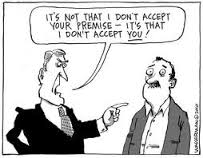
- 1. Well, now just a second, I don"t altogether agree with the premise.
- 嗯,且慢,我并不完全同意这个前提。
来自柯林斯例句
- 2. the basic premise of her argument
- 她的论证的基本前提
来自《权威词典》
- 3. Let me premise my argument with a bit of history.
- 让我引述一些史实作为我立论的前提.
来自《现代英汉综合大词典》
- 4. We can deduce a conclusion from the premise.
- 我们可以从这个前提推出结论.
来自《简明英汉词典》
- 5. I disagree with the premise that economic development has priority over the environment.
- 我不赞成经济发展应优先于环境保护这个前提。
来自柯林斯例句WwW.wenTIyI.cOM
近反义词
相似短语
单词分析
暂无,等待补充.
记忆方法
暂无,等待补充.
版权声明:问题易所有作品(图文、音视频)均来源网络,版权归原创作者所有,与本站立场无关,如不慎侵犯了你的权益,请联系我们告知,我们将做删除处理!