
swallow基本信息
读法:英 ["swɒləʊ] 美 ["swɑlo]
释义:
使用频率:★★
星级词汇:★★★
英英释义
Noun:
"he took a drink of his beer and smacked his lips"
"I swallowed the insult"
"She has learned to live with her husband"s little idiosyncrasies"
中英词源
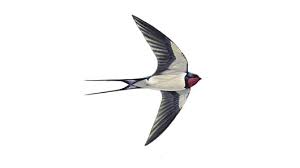
swallow 燕子,燕
来自古英语 swealwe,燕子,来自 Proto-Germanic*swalwo,燕子。
- swallow
- swallow: English has two distinct words swallow. The verb, ‘ingest’ [OE], comes from a prehistoric Germanic *swelgan, which also produced German schwelgen, Dutch swelgen, Swedish svälja, and Danish svælge. It was formed from a base which also gave Old Norse svelgr ‘whirlpool, devourer’. Swallow the bird [OE] comes from a prehistoric Germanic *swalwōn, which also produced German schwalbe, Dutch zwaluw, Swedish svala, and Danish svale and is probably related to Russian solovej ‘nightingale’.
- swallow (v.)
- "ingest through the throat" (transitive), Old English swelgan "swallow, imbibe, absorb" (class III strong verb; past tense swealg, past participle swolgen), from Proto-Germanic *swelgan/*swelhan (cognates: Old Saxon farswelgan, Old Norse svelgja "to swallow," Middle Dutch swelghen, Dutch zwelgen "to gulp, swallow," Old High German swelahan "to swallow," German schwelgen "to revel"), probably from PIE root *swel- (1) "to eat, drink" (cognates: Iranian *khvara- "eating").
Intransitive sense "perform the act of swallowing" is from c. 1700. Sense of "consume, destroy" is attested from mid-14c. Meaning "to accept without question" is from 1590s. Related: Swallowed; swallowing. - swallow (n.1)
- type of migratory bird (family Hirundinidae), Old English swealwe "swallow," from Proto-Germanic *swalwon (cognates: Old Saxon, Old Norse, Old Frisian, Swedish svala, Danish svale, Middle Dutch zwalewe, Dutch zwaluw, Old High German swalawa, German Schwalbe), from PIE *swol-wi- (cognates: Russian solowej, Slovak slavik, Polish słowik "nightingale"). The etymological sense is disputed. Popularly regarded as harbingers of summer; swallows building nests on or near a house is considered good luck.
- swallow (n.2)
- "an act of swallowing," 1822, from swallow (v.). In late Old English and Middle English it meant "gulf, abyss, hole in the earth, whirlpool," also, in Middle English, "throat, gullet." Compare Old Norse svelgr "whirlpool," literally "devourer, swallower." Meaning "as much as one can swallow at once, mouthful" is from 1861.
词态变化
复数 swallows;
第三人称单数 swallows;
过去式 swallowed;
过去分词 swallowed;
现在分词 swallowing;
权威造句
- 1. I too found this story a little hard to swallow.
- 我也觉得这件事有点难以置信。
来自柯林斯例句
- 2. Did you ever swallow the conspiracy theory about Kennedy?
- 你有没有轻信过有关肯尼迪总统遇刺的阴谋论?
来自柯林斯例句
- 3. You are asked to swallow a capsule containing vitamin B.
- 你要服一粒维生素B胶囊。
来自柯林斯例句
- 4. Sometimes he regurgitates the food we give him because he cannot swallow.
- 有时他会倒嚼我们喂给他吃的食物,因为他无法吞咽。
来自柯林斯例句
- 5. During the 1980s monster publishing houses started to swallow up smaller companies.
- 20世纪80年代,一些出版巨头开始吞并一些较小的公司。
来自柯林斯例句
近反义词
相似短语
单词分析
这些动词均可表示“吃”之意。eat普通用词,使用广泛。既可用于人,也可用于动物。
dine正式用词,既可指一日三餐中的任何一餐,也可以指特殊的用餐。
have可与eat换用,但强调一次性的动作。
consume侧重痛痛快快地吃得一干二净,可用于人和动物。
devour指狼吞虎咽地吃,强调吃得既快又彻底。
gorge侧重指拼命地吃或塞,强调吃饱或吃得过量。
swallow主要指吃的整个过程的第二部分“咽”,并常指咀嚼得匆匆忙忙地吃。
记忆方法
1. 形近词:wallow, tallow, swallow, shallow, sallow, hallow, callow, fallow.
2. 蛇在一个低矮的墙上,准备吞食这只燕子。
版权声明:问题易所有作品(图文、音视频)均来源网络,版权归原创作者所有,与本站立场无关,如不慎侵犯了你的权益,请联系我们告知,我们将做删除处理!