
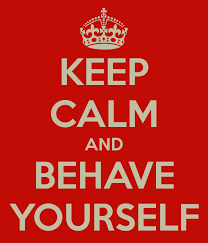
behave基本信息
读法:英 [bɪ"heɪv] 美 [bɪ"hev]
释义:
使用频率:★★★
星级词汇:★★★★
英英释义
Verb:
"Don"t behave like a fool"
"What makes her do this way?"
"The dog acts ferocious, but he is really afraid of people"
"he bore himself with dignity"
"They conducted themselves well during these difficult times"
中英词源
behave 表现
前缀be-, 强调。have, 持有,举止。
- behave
- behave: [15] To ‘behave oneself’ originally meant literally to ‘have oneself in a particular way’ – have being used here in the sense ‘hold’ or ‘comport’. The be- is an intensive prefix. Of particular interest is the way in which the word preserves in aspic the 15th-century pronunciation of have in stressed contexts. For much of its history behave has been used with reference to a person’s bearing and public dignity (‘He was some years a Captain, and behaved himself with great gallantry in several engagements’, Richard Steele, Spectator Number 2, 1711), and the modern connotations of propriety, of ‘goodness’ versus ‘naughtiness’, are a relatively recent, 19th-century development.
The noun behaviour [15] was formed on analogy with the verb from an earlier haviour, a variant of aver ‘possession’ [14], from the nominal use of the Old French verb aveir ‘have’.
=> have - behave (v.)
- early 15c., from be- intensive prefix + have in sense of "to have or bear (oneself) in a particular way, comport" (compare German sich behaben, French se porter). Cognate Old English compound behabban meant "to contain," and alternatively the modern sense of behave might have evolved from behabban via a notion of "self-restraint." Related: Behaved; behaving.
词态变化
第三人称单数 behaves;
过去式 behaved;
过去分词 behaved;
现在分词 behaving;
权威造句
- 1. The aim of discipline is to teach children to behave acceptably.
- 纪律的目的是教育儿童举止得体。
来自柯林斯例句
- 2. I"ll behave toward them as I would like to be treated.
- 我会以希望别人对待我的方式来对待他们。
来自柯林斯例句
- 3. It is shocking that humans can behave with such bestiality towards others.
- 令人震惊的是,人竟然能对同类下此毒手。
来自柯林斯例句
- 4. It"s incredible that Peter can behave with such stupid lack of feeling.
- 彼得行事如此麻木不仁,真是难以置信。
来自柯林斯例句
- 5. Under certain conditions, electrons can behave like waves rather than particles.
- 在一定条件下,电子可以作波状运动,而不是粒子状运动。
来自柯林斯例句
WwW.wENTIYI.Com
近反义词
相似短语
单词分析
暂无,等待补充.
记忆方法
暂无,等待补充.
版权声明:问题易所有作品(图文、音视频)均来源网络,版权归原创作者所有,与本站立场无关,如不慎侵犯了你的权益,请联系我们告知,我们将做删除处理!