
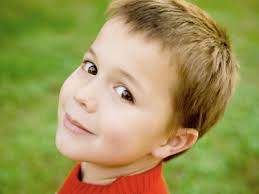
child基本信息
读法:英 [tʃaɪld] 美 [tʃaɪld]
释义:
使用频率:★★★★★
星级词汇:★★★★★Www.wEnTiyi.cOM
英英释义
Noun:
"they"re just kids"
"`tiddler" is a British term for youngster"
"they were able to send their kids to college"
"stop being a baby!"
中英词源
child 儿童
来自PIE*gel, 膨胀,子宫。词源同calf, dolphin. 字面意思即刚出生的婴儿。
- child
- child: [OE] For a word of so central importance, child is surprisingly isolated, having no known living relatives in other Germanic languages. Its prehistoric Germanic ancestor has been reconstructed as *kiltham, which some have linked with Gothic kilthei ‘womb’ and even with Sanskrit jathara ‘belly’. The plural children is not an original feature; it developed in the 12th century. In earliest Old English times the plural was unchanged, like sheep.
- child (n.)
- Old English cild "fetus, infant, unborn or newly born person," from Proto-Germanic *kiltham (cognates: Gothic kilþei "womb," inkilþo "pregnant;" Danish kuld "children of the same marriage;" Old Swedish kulder "litter;" Old English cildhama "womb," lit. "child-home"); no certain cognates outside Germanic. "App[arently] originally always used in relation to the mother as the "fruit of the womb"" [Buck]. Also in late Old English, "a youth of gentle birth" (archaic, usually written childe). In 16c.-17c. especially "girl child."
The wider sense "young person before the onset of puberty" developed in late Old English. Phrase with child "pregnant" (late 12c.) retains the original sense. The sense extension from "infant" to "child" also is found in French enfant, Latin infans. Meaning "one"s own child; offspring of parents" is from late 12c. (the Old English word was bearn; see bairn). Figurative use from late 14c. Most Indo-European languages use the same word for "a child" and "one"s child," though there are exceptions (such as Latin liberi/pueri).
The difficulty with the plural began in Old English, where the nominative plural was at first cild, identical with the singular, then c.975 a plural form cildru (genitive cildra) arose, probably for clarity"s sake, only to be re-pluraled late 12c. as children, which is thus a double plural. Middle English plural cildre survives in Lancashire dialect childer and in Childermas.
Child abuse is attested by 1963; child-molester from 1950. Child care is from 1915. Child"s play, figurative of something easy, is in Chaucer (late 14c.).
词态变化
复数 children;
权威造句
- 1. His house was the only settled home I had as a child.
- 他的房子是我儿时唯一固定的家。
来自柯林斯例句
- 2. The child kept her eyes fixed on the wall behind him.
- 这个小女孩眼睛一直紧盯着他身后的那堵墙。
来自柯林斯例句
- 3. Don"t leave a child alone in a room with an open fire.
- 房间里有裸露的明火时,不要让孩子独处其中。
来自柯林斯例句
- 4. If we had a child, we"d be in really dire straits.
- 假如我们有了小孩,我们会真正陷入困境。
来自柯林斯例句
- 5. If your child"s temperature rises, sponge her down gently with tepid water.
- 如果你孩子的体温上升,就用海绵蘸上温水轻轻地擦拭她的身体。
来自柯林斯例句
近反义词
相似短语
单词分析
这些名词均有“孩子”之意。baby日常用词,一般指从刚出生的婴儿到满两岁的或非常小的孩子,常含钟爱意味。
child普通用词,含义广,无感情色彩。泛指从胎儿、婴儿到10岁左右的儿童。
infant书面用词,狭义指出生后到两岁的小孩,广义指7岁以下的孩子;法律上则指未到法定年龄。
youngster泛指任何年龄的儿童或者少年,多指男孩,多为年长者的使用。
记忆方法
暂无,等待补充.
版权声明:问题易所有作品(图文、音视频)均来源网络,版权归原创作者所有,与本站立场无关,如不慎侵犯了你的权益,请联系我们告知,我们将做删除处理!