
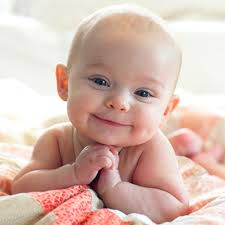
baby基本信息
读法:英 ["beɪbɪ] 美 ["bebi]
释义:
使用频率:★★★★
星级词汇:★★★★★
英英释义
Noun:
"she held the baby in her arms"
"it sounds simple, but when you have your own baby it is all so different"
"the baby of the Supreme Court"
"stop being a baby!"
"it was great to feel my baby moving about inside"
"Let"s not mollycoddle our students!"
中英词源
baby 婴儿
拟声词,模仿婴儿啼哭。
- baby
- baby: [14] Like mama and papa, baby and the contemporaneous babe are probably imitative of the burbling noises made by an infant that has not yet learned to talk. In Old English, the term for what we would now call a ‘baby’ was child, and it seems only to have been from about the 11th century that child began to extend its range to the slightly more mature age which it now covers. Then when the word baby came into the language, it was used synonymously with this developed sense of child, and only gradually came to refer to infants not yet capable of speech or walking.
- baby (n.)
- late 14c., babi, diminutive of baban (see babe + -y (3)). Meaning "childish adult person" is from c. 1600. Meaning "youngest of a group" is from 1897. As a term of endearment for one"s lover it is attested perhaps as early as 1839, certainly by 1901; its popularity perhaps boosted by baby vamp "a popular girl," student slang from c. 1922. As an adjective, by 1750.
Baby food is from 1833. Baby blues for "blue eyes" recorded by 1892 (the phrase also was used for "postpartum depression" 1950s-60s). To empty the baby out with the bath (water) is first recorded 1909 in G.B. Shaw (compare German das Kind mit dem Bade ausschütten). Baby"s breath (noted for sweet smell, which also was supposed to attract cats) as a type of flower is from 1897. French bébé (19c.) is from English. - baby (v.)
- "to treat like a baby," 1742, from baby (n.). Related: Babied; babying.
词态变化
复数 babies;
第三人称单数 babies;
过去式 babied;
过去分词 babied;
现在分词 babying;
比较级 babier;
最高级 babiest;
权威造句
- 1. Maria was talking baby talk to the little one.
- 玛丽亚正用儿语和小家伙说话。
来自柯林斯例句
- 2. If a baby is thirsty, it feeds more often.
- 婴儿要是渴了,就会吃得更频繁。
来自柯林斯例句
- 3. Derek is now the proud father of a bouncing baby girl.
- 德里克现在为有一个健康活泼的女宝宝而骄傲。
来自柯林斯例句
- 4. The birth of a live healthy baby is a truly blessed event.
- 一个健康活泼的婴儿的出生真是一件可喜的事情。
来自柯林斯例句
- 5. Don"t assume your baby automatically needs feeding if she"s fretful.
- 不要想当然地认为你的宝宝一闹就是要吃奶。
来自柯林斯例句
近反义词
n.
相似短语
单词分析
这些名词均有“孩子”之意。baby日常用词,一般指从刚出生的婴儿到满两岁的或非常小的孩子,常含钟爱意味。
child普通用词,含义广,无感情色彩。泛指从胎儿、婴儿到10岁左右的儿童。
infant书面用词,狭义指出生后到两岁的小孩,广义指7岁以下的孩子;法律上则指未到法定年龄。
youngster泛指任何年龄的儿童或者少年,多指男孩,多为年长者的使用。
记忆方法
暂无,等待补充.
版权声明:问题易所有作品(图文、音视频)均来源网络,版权归原创作者所有,与本站立场无关,如不慎侵犯了你的权益,请联系我们告知,我们将做删除处理!