
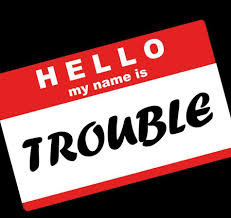
trouble基本信息
读法:英 ["trʌb(ə)l] 美 ["trʌbl]
释义:
使用频率:★★★★
星级词汇:★★★★
英英释义
Noun:
"what"s the problem?"
"they had labor trouble"
"a spot of bother"
"heart trouble"
"he won without any trouble"
"had difficulty walking"
"finished the test only with great difficulty"
"it is not work but worry that kills"
"he wanted to die and end his troubles"
"A troubling thought"
"Don"t bother, please"
中英词源
trouble 麻烦,困难,问题
置换自古法语 truble,麻烦,混乱,来自拉丁语 turbidus,混乱的,骚乱的,来自 turbare,混乱, 骚乱,词源同 turbid.引申诸相关词义。
- trouble
- trouble: [13] Trouble is etymologically something that ‘disturbs’ one – indeed, the two words are related. Trouble was borrowed from Old French trouble or tourble, a derivative of the verb tourbler. This was descended from Vulgar Latin *turbulāre, a derivative of *turbulus, which in turn was an alteration of Latin turbidus ‘wild, confused, muddy’ (source of English turbid [17]).
And turbidus itself was derived from turba ‘disturbance, crowd’ (a borrowing from Greek túrbē ‘disorder’), which also produced the verb turbāre ‘disturb’ (source of English disturb [13] and turbulent [16]). Turbine too is closely related.
=> disturb, turbid, turbine, turbulent - trouble (v.)
- c. 1200, from Old French trubler, metathesis of turbler, torbler "to trouble, disturb; make cloudy, stir up, mix" (11c.), from Vulgar Latin *turbulare, from Late Latin turbidare "to trouble, make turbid," from Latin turbidus (see turbid). Related: Troubled; troubling.
- trouble (n.)
- c. 1200, "agitation of the mind, emotional turmoil," from Old French truble, torble "trouble, disturbance" (12c.), from trubler/torbler (see trouble (v.)). From early 15c. as "a concern, a cause for worry;" 1590s as "something that causes trouble." Meaning "unpleasant relations with the authorities" is from 1550s. Related: Troubles (1510s). Trouble and strife as rhyming slang for "wife" is recorded from 1908.
词态变化
复数 troubles;
第三人称单数 troubles;
过去式 troubled;
过去分词 troubled;
现在分词 troubling;
权威造句
- 1. She dropped out after 20 kilometres with stomach trouble.
- 20公里后她因胃痛而退出了比赛。
来自柯林斯例句
- 2. Her husband had never before had any heart trouble.
- 她丈夫以前从来没得过任何心脏疾病。
来自柯林斯例句wwW.wENtiyi.COm
- 3. A dentist may decide to extract the tooth to prevent recurrent trouble.
- 牙医可能会决定拔掉那颗牙,以免反复发作。
来自柯林斯例句
- 4. She was fitted with a pacemaker after suffering serious heart trouble.
- 她患上严重的心脏病后安装了心脏起搏器。
来自柯林斯例句
- 5. There are recognised black spots in marriages which can lead to trouble.
- 婚姻中有一些公认的容易引发问题的雷区。
来自柯林斯例句
近反义词
n.
相似短语
单词分析
这些动词均有“使人不安或烦恼”之意。bother指使人烦恼而引起的紧张不安或感到不耐烦。
disturb较正式用词,多用被动态。指拢乱,使人不能平静或妨碍别人工作、思维或正常秩序,是程度较深的烦恼。
trouble指给人在行动上带来不便或在身心上造成痛苦。
annoy强调因被迫忍受令人不快、讨厌的事而失去平静或耐心,多指一时的打拢或恼怒。
irritate语气比annoy强得多,指激怒,使发怒,多指一种短时间的反应。
vex侧重指因不断的干扰而引起的烦恼,有时含激怒的意味。 这些名词均表示“努力”之意。
effort通常指完成某特定任务所需付出的或大或小的努力,可指一次的努力,也可指坚持不懈的努力。
trouble和pains均侧重在面临困难或阻力时所作的努力,但强调在努力时的细心和谨慎,相比之下,pains更适合表示尽力的努力。
pains
endeavour指持久的,坚持不懈的,甚至是终身的努力,强调努力的认真与决心。
struggle指为克服困难或阻力所作的努力,也指因决心、意志或干劲而产生的极大努力。
记忆方法
暂无,等待补充.
版权声明:问题易所有作品(图文、音视频)均来源网络,版权归原创作者所有,与本站立场无关,如不慎侵犯了你的权益,请联系我们告知,我们将做删除处理!