
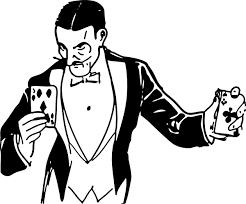
trick基本信息
读法:英 [trɪk] 美 [trɪk]
释义:
使用频率:★★★WWW.WentIYi.Com
星级词汇:★★★★
英英释义
Noun:
"he pulled a fast one and got away with it"
中英词源
trick 花招,把戏,戏法,窍门
来自古法语 trichier,欺骗,诡计,来自拉丁语 tricari,逃避,回避,来自 tricae,琐碎,胡扯,混 乱,可能来自 PIE*ter,转,卷入,词源同 turn,intricate,extricate.引申词义花招,把戏等。
- trick
- trick: [15] Trick comes from Old French trique, a variant of triche, which was derived from the verb trichier ‘cheat’ (source of English treachery). And this in turn probably came from Latin trīcarī ‘make difficulties, play tricks’ (source also of English extricate [17] and intricate [15]), a derivative of trīcae ‘difficulties, tricks’, whose origins are unknown. Tricky dates from the 18th century, its use for ‘difficult’ from the end of the 19th century.
=> extricate, intricate, treachery - trick (n.)
- early 15c., "a cheat, a mean ruse," from Old North French trique "trick, deceit, treachery, cheating," from trikier "to deceive, to cheat," variant of Old French trichier "to cheat, trick, deceive," of uncertain origin, probably from Vulgar Latin *triccare, from Latin tricari "be evasive, shuffle," from tricæ "trifles, nonsense, a tangle of difficulties," of unknown origin.
Meaning "a roguish prank" is recorded from 1580s; sense of "the art of doing something" is first attested 1610s. Meaning "prostitute"s client" is first attested 1915; earlier it was U.S. slang for "a robbery" (1865). To do the trick "accomplish one"s purpose" is from 1812; to miss a trick "fail to take advantage of opportunity" is from 1889; from 1872 in reference to playing the card-game of whist, which might be the original literal sense. Trick-or-treat is recorded from 1942. Trick question is from 1907. - trick (v.)
- "deceive by trickery," 1590s, from trick (n.). Related: Tricked; tricking. The sense of "to dress, adorn" (c. 1500) is perhaps a different word entirely.
词态变化
复数 tricks;
第三人称单数 tricks;
过去式 tricked;
过去分词 tricked;
现在分词 tricking;
权威造句
- 1. I don"t think Mr Cavanagh would get far with that trick.
- 我想卡瓦纳先生的那套把戏玩不了多久。
来自柯林斯例句
- 2. She is the victim of a big con trick.
- 她是一场大骗局的受害者。
来自柯林斯例句
- 3. Love songs trick us into believing in knights in shining armor.
- 情歌哄骗我们去相信有勇救美人的英雄。
来自柯林斯例句
- 4. Sometimes a few choice words will do the trick.
- 有时说几句尖酸刻薄的话就有人听了。
来自柯林斯例句
- 5. It"s an old trick but it just might work.
- 这是个老掉牙的把戏了,不过也许会有用。
来自柯林斯例句
近反义词
n.
相似短语
单词分析
这些动词均含有“欺骗”之意。cheat普通用词,指用蒙蔽他人的手段取得所需之物,尤多指在赢利的买卖中欺骗人。
deceive最普通用词,指用虚假外表使人信以为真,或蓄意歪曲事实,或造成错误印象使人上当受骗。
trick指用阴谋诡计等骗得信任或得到所需之物。
fool指把别人当傻瓜,愚弄欺骗别人。
记忆方法
暂无,等待补充.
版权声明:问题易所有作品(图文、音视频)均来源网络,版权归原创作者所有,与本站立场无关,如不慎侵犯了你的权益,请联系我们告知,我们将做删除处理!