
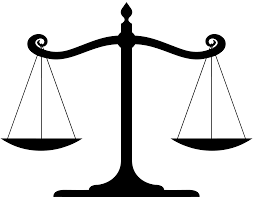
scale基本信息
读法:英 [skeɪl] 美 [skel]
释义:
使用频率:★★★★
星级词汇:★★★★★
英英释义
Noun:
"the scale of the model"
中英词源
scale 水垢,牙石,秤,天平,鳞片Www.WEnTiyi.coM
来自古诺斯语 skel,贝壳,skal,碗,饮水容器,来自 Proto-Germanic*skaela,分开,劈开,来自 PIE*skel,砍,切,分开,词源同 shell,scallop.由贝壳引申词义碗,饮水器具,由贝壳的钙化 性质引申词义水垢,牙石,由碗,饮水容器引申词义秤,天平,即秤的原型,由该印欧语的 词根义引申词义鱼鳞,鳞片等。
scale 梯子,攀登,攀爬,规模,范围,程度,等级,比例
来自拉丁语 scala,梯子,来自(缩写自)scandere,攀爬,攀登,来自 PIE*skand,爬,上升, 词源同 scan,ascend,descend.字母 d 脱落,类似拼写比较 rule,regulate.引申词义规模,范围, 程度,等级,比例等。
- scale
- scale: English has three separate words scale. The oldest, ‘pan of a balance’ [13], was borrowed from Old Norse skál ‘bowl, drinking cup’ (ancestor of Swedish skåal, from which English gets the toast skol [16]). This was descended from a Germanic base *skal-, *skel-, *skul-, denoting ‘split, divide, peel’, which also produced English scalp, shell, shelter, shield, skill, probably skull, and also scale ‘external plate on fish, etc’ [14].
This second scale was borrowed from Old French escale, which itself was acquired from prehistoric Germanic *skalō – another derivative of *skal-. Its modern German descendant, schale, is the probable source of English shale [18]. The third scale, which originally meant ‘ladder’ [15], came from Latin scāla ‘ladder’, a descendant of the same base as Latin scandere ‘climb’, from which English gets ascend, descend, scan, and scandal. (In modern French scāla has evolved to échelle, whose derivative échelon has given English echelon [18].) The modern meanings of the word, variations on the theme ‘system of graduations used for measuring’, are metaphorical extensions of the original ‘ladder, steps’.
Its use as a verb, meaning ‘climb’, goes back to the medieval Latin derivative scālāre.
=> scalp, shell, shelter, shield, skill, skol, skull; shale; ascend, descend, echelon, scan, scandal - scale (n.1)
- "skin plates on fish or snakes," c. 1300, from Old French escale "cup, scale, shell pod, husk" (12c., Modern French écale) "scale, husk," from Frankish *skala or some other Germanic source, from Proto-Germanic *skælo "split, divide" (cognates: Dutch schaal "a scale, husk," Old High German scala "shell," Gothic skalja "tile," Old English scealu "shell, husk"), from PIE root *(s)kel- (1) "to cut, cleave, split" (cognates: Latin culter "knife," scalpere "to cut, scrape;" Old Church Slavonic skolika "mussel, shell," Russian skala "rind, bark," Lithuanian skelti "split," Old English scell "shell," scalu "drinking cup, bowl, scale of a balance").
In reference to humans, as a condition of certain skin diseases, it is attested from c. 1400. As what falls from one"s eye when blindness ends (usually figurative), it echoes Acts ix:18 (Latin tanquam squamæ, Greek hosei lepides). - scale (n.2)
- weighing instrument, early 15c.; earlier "pan of a balance" (late 14c.); earlier still "drinking cup" (c. 1200), from Old Norse skal "bowl, drinking cup," in plural, "weighing scale" from a noun derivative of Proto-Germanic *skæla "split, divide" (cognates: Old Norse skel "shell," Old English scealu, Old Saxon skala "a bowl (to drink from)," Old High German scala, German Schale "a bowl, dish, cup," Middle Dutch scale, Dutch schaal "drinking cup, bowl, shell, scale of a balance"), from PIE root *skel- (1) "to cut" (see scale (n.1)).
The connecting sense seems to be of half of a bivalve ("split") shell used as a drinking cup or a pan for weighing. But according to Paulus Diaconus the "drinking cup" sense originated from a supposed custom of making goblets from skulls (see skull). Related: Scales. This, as a name for the zodiac constellation Libra, is attested in English from 1630s. - scale (v.1)
- "to climb by or as by a ladder," late 14c., from scale (n.) "a ladder," from Latin scala "ladder, flight of stairs," from *scansla, from stem of scandere "to climb" (see scan (v.)). Related: Scaled; scaling.
- scale (n.3)
- "series of registering marks to measure by; marks laid down to determine distance along a line," late 14c., from Latin scala "ladder, staircase" (see scale (v.1)). Meaning "succession or series of steps" is from c. 1600; that of "standard for estimation" (large scale, small scale, etc.) is from 1620s. Musical sense (1590s), and the meaning "proportion of a representation to the actual object" (1660s) are via Italian scala, from Latin scala.
- scale (v.3)
- "weigh in scales," 1690s, from scale (n.2). Earlier "to compare, estimate" (c. 1600). Meaning "measure or regulate by a scale" is from 1798, from scale (n.3); that of "weigh out in proper quantities" is from 1841. Scale down "reduce proportionately" is attested from 1887. Scale factor is from 1948. Related: Scaled; scaling.
- scale (v.2)
- "remove the scales of (a fish, etc.)," c. 1400, from scale (n.1). Intransitive sense "to come off in scales" is from 1520s. Related: Scaled; scaling.
词态变化
复数 scales;
第三人称单数 scales;
过去式 scaled;
过去分词 scaled;
现在分词 scaling;
权威造句
- 1. The patient rates the therapies on a scale of zero to ten.
- 患者按十分制给这些治疗方法打分。
来自柯林斯例句
- 2. The scale of migration took a quantum leap in the early 1970s.
- 20世纪70年代初,移民的规模骤然扩大。
来自柯林斯例句
- 3. Car firms are desperate to achieve economies of scale.
- 汽车厂商拼命想要实现规模经济。
来自柯林斯例句
- 4. A full-scale debate is under way on what ails the industry.
- 关于工业为何陷入困境正在展开一场全面的讨论。
来自柯林斯例句
- 5. You may feel dwarfed by the sheer scale of the place.
- 看到此处气势如此恢宏,你可能会觉得自己很渺小。
来自柯林斯例句
近反义词
n.
相似短语
单词分析
暂无,等待补充.
记忆方法
暂无,等待补充.
版权声明:问题易所有作品(图文、音视频)均来源网络,版权归原创作者所有,与本站立场无关,如不慎侵犯了你的权益,请联系我们告知,我们将做删除处理!