
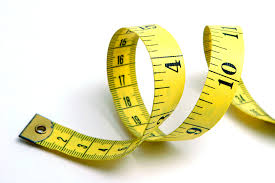
measure基本信息
读法:英 ["meʒə] 美 ["mɛʒɚ]
释义:
使用频率:★★★★
星级词汇:★★★★★
英英释义
Noun:
"the police took steps to reduce crime"
"his mental measurings proved remarkably accurate"
"they set the measure for all subsequent work"
"access all the factors when taking a risk"
中英词源
measure 测量,尺度,方法
来自古法语mesurer,测量,来自拉丁语mensurare,测量,检测,来自PIE*me,测量,词源同meter,commensurate.
- measure
- measure: [13] The distant ancestor of English measure was the Indo-European base *ma-, *me- ‘measure’. This has generated a wide range of often unexpected English progeny, including meal ‘repast’, month, and moon. Measure itself comes from an extension of the base, *mat-, *met-, from which was derived the Latin verb mētīrī ‘measure’.
Its past participial stem mēnsformed the basis of the noun mēnsūra ‘measure’, which passed into English via Old French mesure as measure. From the same Latin stem come commensurate [17], dimension [14], and immense [15] (literally ‘unmeasurable’); and other related forms that go back to the base *mat-, *met- (or *med-) include mate ‘friend’, meat, meditate, meet ‘suitable’, mete, mode, moderate, modest, and modify.
=> commensurate, dimension, immense, mate, meal, meat, meditate, meet, mete, metre, mode, moderate, modest, month, moon - measure (v.)
- c. 1300, "to deal out by measure," from Old French mesurer "measure; moderate, curb" (12c.), from Late Latin mensurare "to measure," from Latin mensura "a measuring, a measurement; thing to measure by," from mensus, past participle of metiri "to measure," from PIE *me- (2) "to measure" (see meter (n.2)).
Replaced Old English cognate mæð "measure." Meaning "to ascertain spatial dimensions of" is mid-14c. To measure up "have the necessary abilities" is 1910, American English. Related: Measured; measuring. - measure (n.)
- c. 1200, "moderation, temperance, abstemiousness;" c. 1300, "instrument for measuring," from Old French mesure "limit, boundary; quantity, dimension; occasion, time" (12c.), from Latin mensura "measure" (see measure (v.)). Meaning "size or quantity as ascertained by measuring" is from early 14c. Meaning "action of measuring; standard measure of quantity; system of measuring; appointed or alloted amount of anything" is late 14c. Also from late 14c. are senses "proper proportion, balance." Sense of "that to which something is compared to determine its quantity" is from 1570s. Meaning "rhythmic pattern in music" is late 14c.; from mid-15c. in poetry, c. 1500 in dance. Meaning "treatment "meted out" to someone" is from 1590s; that of "plan or course of action intended to obtain some goal" is from 1690s; sense of "legislative enactment" is from 1759. Phrase for good measure (late 14c.) is literally "ample in quantity, in goods sold by measure."
词态变化
复数 measures;
第三人称单数 measures;
过去式 measured;
过去分词 measured;
现在分词 measuring;
权威造句
- 1. The colonies were claiming a larger measure of self-government.
- 殖民地正要求获得更大程度上的自治。
来自柯林斯例句
- 2. The cushions, shown left, measure 20× 12 inches and cost $39.95.
- 展示在左边的垫子,长20英寸宽12英寸,价格是39.95美元。
来自柯林斯例句
- 3. The local administration says the curfew is a precautionary measure.
- 地方当局说宵禁是一种预防措施。
来自柯林斯例句
- 4. Measure the floor area of the greenhouse and divide it by six.
- 量一下温室的建筑面积再将它除以6。
来自柯林斯例句
- 5. Francis poured a generous measure of the whisky into a fresh glass.
- 弗朗西斯往一个干净的玻璃杯里倒了很多威士忌。
来自柯林斯例句
近反义词
v.
相似短语
单词分析
暂无,等待补充.
记忆方法
暂无,等待补充.
版权声明:问题易所有作品(图文、音视频)均来源网络,版权归原创作者所有,与本站立场无关,如不慎侵犯了你的权益,请联系我们告知,我们将做删除处理!